
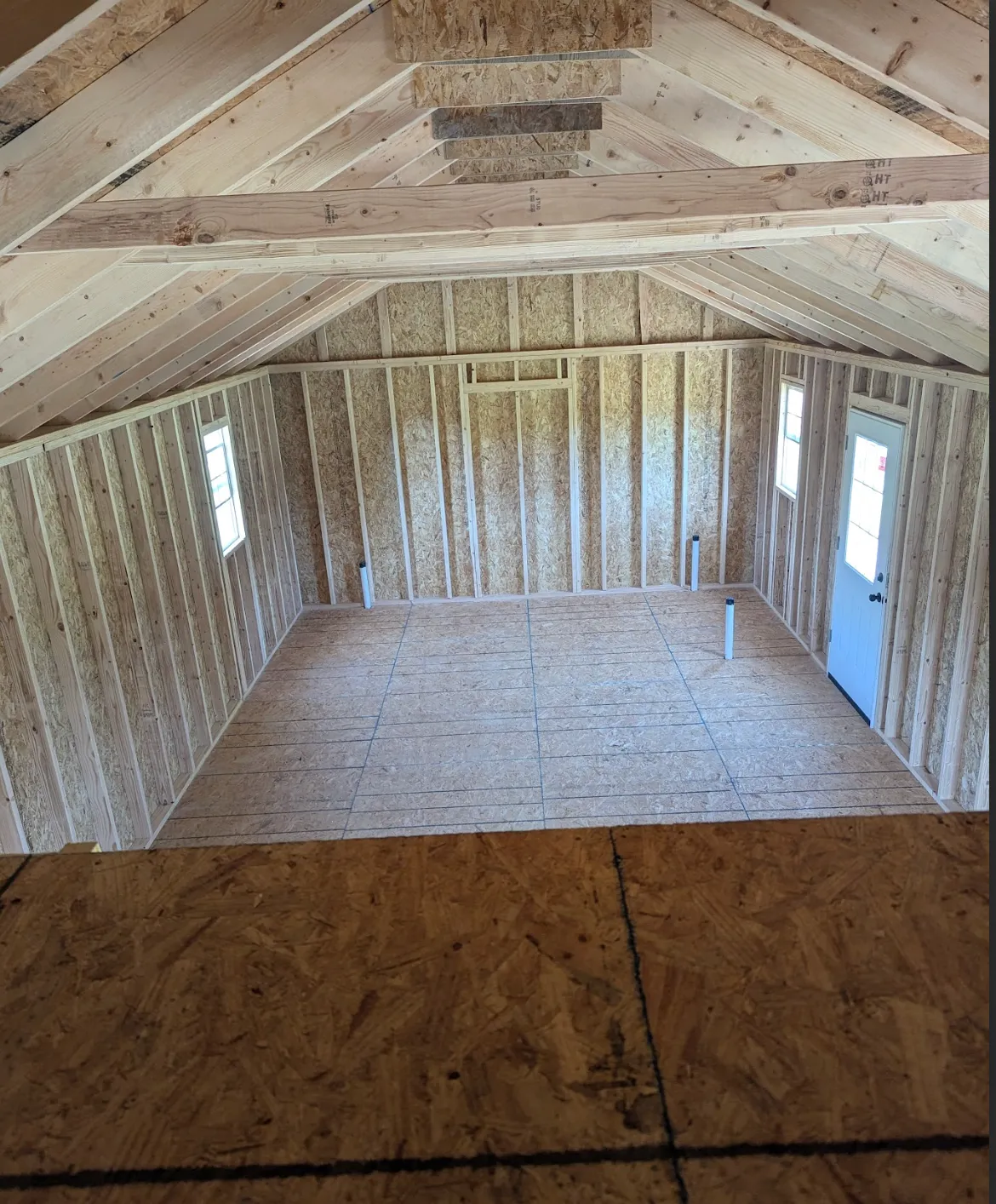
Finding a good barn builder in Texas is harder than it should be. There are plenty of companies that will take your money. Fewer that will actually build something worth having. I have been in this business for 15 years and I have seen the work that other builders leave behind. Some of it is embarrassing. Crooked walls, roofs that leak within a year, foundations that shift and crack.
Whether you need a barn style shed for your backyard or a full sized agricultural building for your property, the builder you choose determines whether you get a structure that lasts generations or one that becomes a problem within years. This guide covers what to look for, what to avoid and how to make sure you get your money's worth.
What Actually Makes a Good Barn Builder
Experience matters but not in the way most people think. A company that has been around for 20 years might have been doing mediocre work for 20 years. What you want is someone who understands construction at a fundamental level. Someone who can explain why they do things a certain way. Someone who has solved problems on difficult sites and knows how to adapt when things do not go as planned.
Look for builders who specialize in what you need. A company that mostly builds houses and occasionally does a barn is not the same as a company that builds barns and sheds every week. The specialized builder knows the specific challenges. They have the right equipment. They have solved the problems you are going to encounter.
Communication is a huge indicator of quality. If a builder is hard to reach before you sign a contract imagine how hard they will be to reach when something goes wrong during construction. The best builders are responsive, clear about what they will deliver and honest about timelines and costs. Customers in Fort Worth and Denton tell us that our communication is one of the main reasons they chose us.
Understanding Barn Costs in Texas
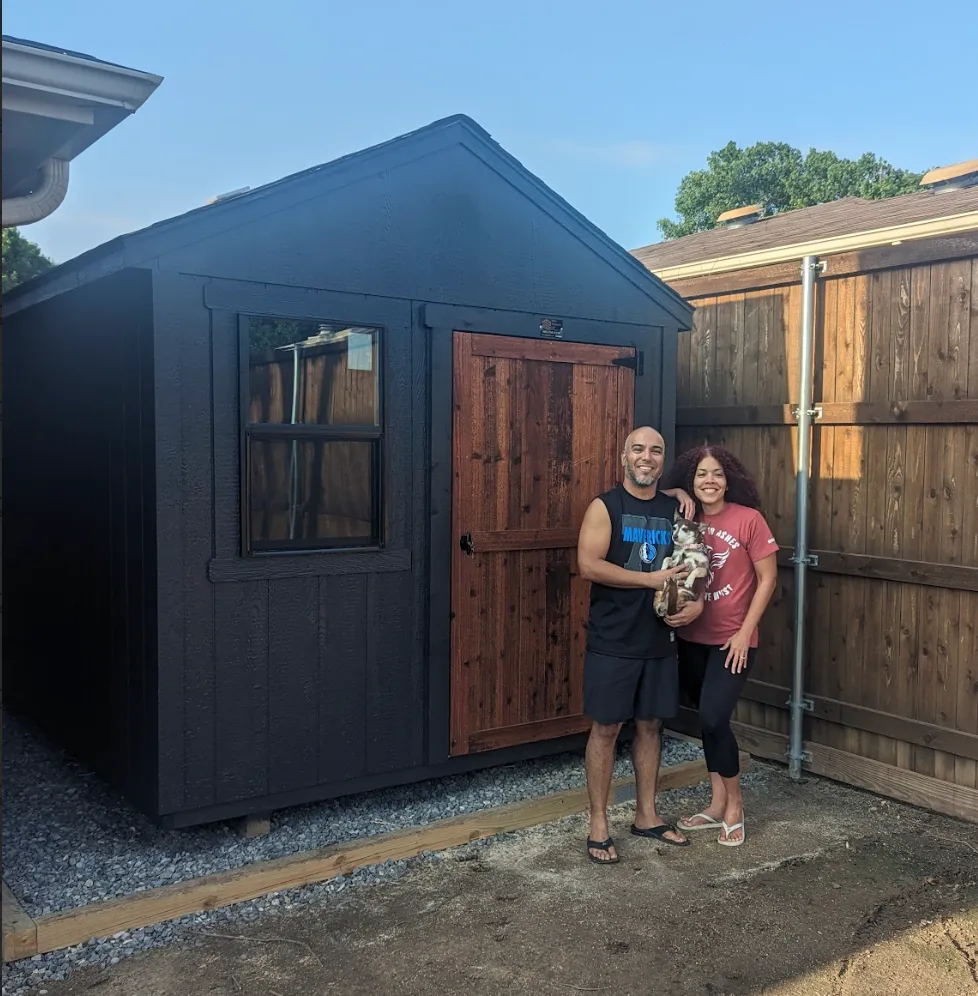
Barn pricing confuses a lot of people because the range is so wide. You can spend $4000 on a barn style shed or $50000 on a full agricultural barn. The difference comes down to size, materials and features.
A barn style shed is basically a storage shed with a gambrel roof. That curved roofline gives you extra overhead storage space and looks great. These typically run 12x16 to 12x24 and cost between $4500 and $9000 depending on features. This is what most residential customers in Rhome and Azle are looking for.
Small agricultural barns start around 16x24 and go up to about 24x36. These are big enough for a couple of horses, a tractor or serious storage. Expect to pay $10000 to $25000 depending on how they are finished out. You can go basic with just a shell or add stalls, tack rooms, electrical and other features.
Medium and large barns get into serious money. A 30x40 barn with a concrete floor, electrical, stalls and proper ventilation can easily hit $35000 or more. At this level you are making a major investment and you need a builder who knows what they are doing.
Be suspicious of quotes that seem too low. Either the builder is cutting corners on materials, they are going to hit you with change orders later or they are not going to be around to honor any warranty. Quality construction costs what it costs.
Why Texas Barns Are Different
Building a barn in Texas is not the same as building one in Ohio or Oregon. Our climate creates specific challenges that out of state builders often miss.
Heat is the obvious one. A barn without proper ventilation becomes an oven in summer. That is dangerous for animals and hard on stored equipment. You need ridge vents, gable vents, cupolas or some combination. The goal is getting hot air out and cooler air in without creating a wind tunnel.
Storms are the other major factor. Texas gets serious wind, hail and occasionally tornadoes. Your barn needs to be anchored properly. The roof needs to be rated for high winds. Metal roofing handles hail better than shingles. These are not optional upgrades. They are necessities.
The soil in North Texas is challenging. We have expansive clay that moves with moisture changes. A barn foundation that works in sandy soil will fail in clay. Customers in Bridgeport and Decatur deal with particularly difficult ground. We know how to handle it because we have been building here for years.
Humidity promotes rot and insects. Every piece of lumber that contacts the ground or could get wet needs to be pressure treated. The cheap builders skip this to save money. Then the barn starts falling apart in five years.
On Site Construction vs Prefab Delivery
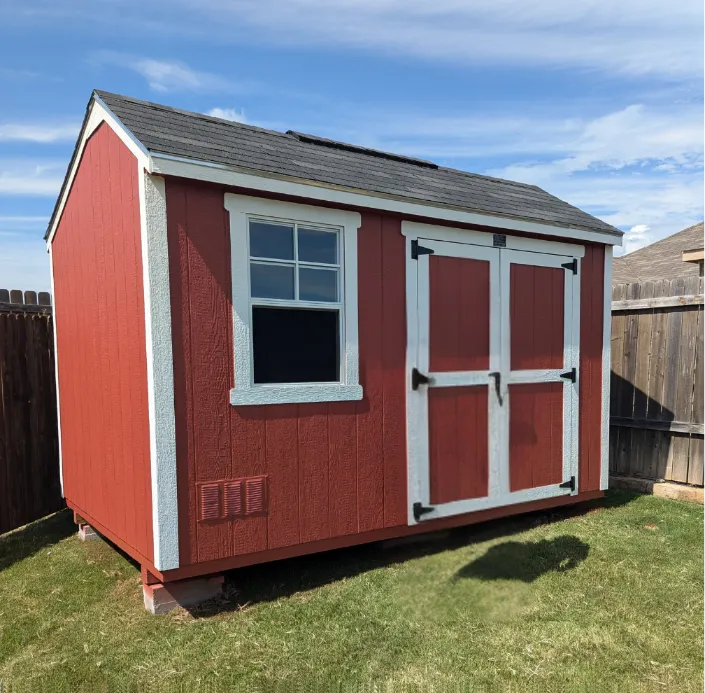
There are two ways to get a barn. Have it built somewhere else and delivered or have it built right on your property. For smaller barn style sheds either approach can work. For anything larger on site construction is usually the only practical option.
Prefab barns are limited by what can fit on a trailer and navigate roads. Anything over about 14 feet wide becomes a problem. You also need clear access to your property. Tight driveways, low branches, narrow gates and slopes all create issues. I have seen prefab deliveries fail because nobody checked the access beforehand.
On site construction eliminates these problems. We bring materials and build right where the barn will sit. No size limits. No access issues. We can work around trees, slopes and obstacles. The barn gets built exactly where you want it.
On site also means we can adjust as we go. If the ground is not quite level we handle it. If you decide you want the door on the other side we can do that. If we discover something unexpected during construction we adapt. Prefab barns are what they are.
The main advantage of prefab is speed. A prefab barn shows up mostly complete. On site construction takes several days to a couple weeks depending on size. But for most people the flexibility of on site construction is worth the extra time.
What to Look for in Materials
The materials in your barn determine how long it lasts. Cheap materials mean a cheap barn that falls apart. Quality materials mean a barn your grandkids will use.
Framing lumber should be pressure treated for any ground contact and for the bottom plates of walls. The rest can be standard lumber but it should be straight and properly dried. Green lumber warps as it dries and creates problems.
Siding options include wood, metal and engineered products like LP SmartSide. Metal siding is durable and low maintenance but dents and can be noisy in rain. Wood looks great but needs regular maintenance. Engineered siding offers a good balance of durability and appearance.
Roofing should be metal for any serious barn. Metal roofs last 40 to 50 years with minimal maintenance. They reflect heat, shed water quickly and handle hail better than shingles. The upfront cost is higher but the lifetime cost is lower.
Hardware matters more than people realize. Cheap hinges fail. Cheap latches break. Cheap fasteners rust. Quality hardware costs a little more and lasts a lot longer.
Questions to Ask Before Hiring
Before you sign anything get answers to these questions.
How long have you been building barns specifically? General construction experience is not the same as barn building experience.
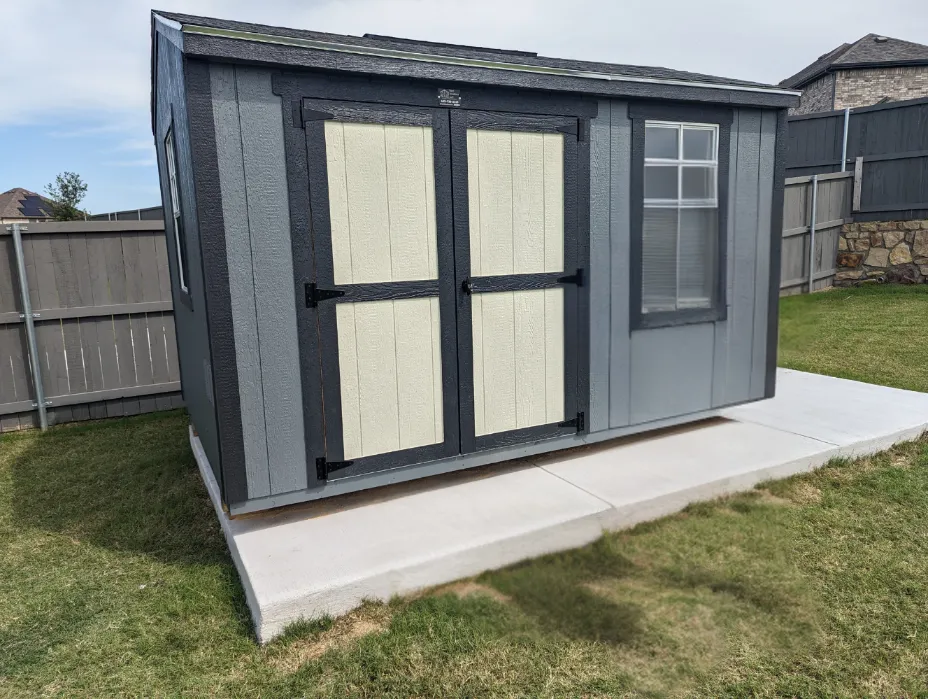
Can I see examples of your work? Any legitimate builder has photos and can provide addresses of completed projects. If they cannot show you their work that is a red flag.
What materials do you use? Get specific answers. What gauge metal for the roof? What treatment for the lumber? What brand of siding? Vague answers mean they are cutting corners.
What is included in the quote? Get everything in writing. Foundation, electrical, ventilation, doors, windows, paint. Anything not specified will become an expensive change order.
What warranty do you offer? We warranty our workmanship for 5 years. Materials have their own manufacturer warranties. Anyone not offering at least a year on labor is not confident in their work.
How do you handle permits? In many areas barns over a certain size require permits. A good builder knows the local requirements and handles the paperwork.
What is the timeline? Get a realistic estimate and understand what could cause delays. Weather is the main factor in Texas.
Why We Do This Work
We are third generation carpenters. My grandfather built barns. My father built barns. I have been building barns and sheds for over 15 years. This is not just a job. It is what our family does.
We build across Fort Worth, Denton, Bridgeport, Decatur, Rhome, Azle and all of North Texas. We know this area. We know the soil, the weather, the building codes. We know what works and what does not.
Every barn we build is custom. You tell us what you need and we build it. No cookie cutter designs. No settling for close enough. Your barn, your specifications, built right.
Ready to Talk About Your Barn?
Whether you need a barn style shed or a full agricultural building we can help. Free quotes, honest advice, quality construction.
- Call: (682) 730-2238
- See our work: Recent projects
- Barn sheds: View options
- Financing: Payment plans available