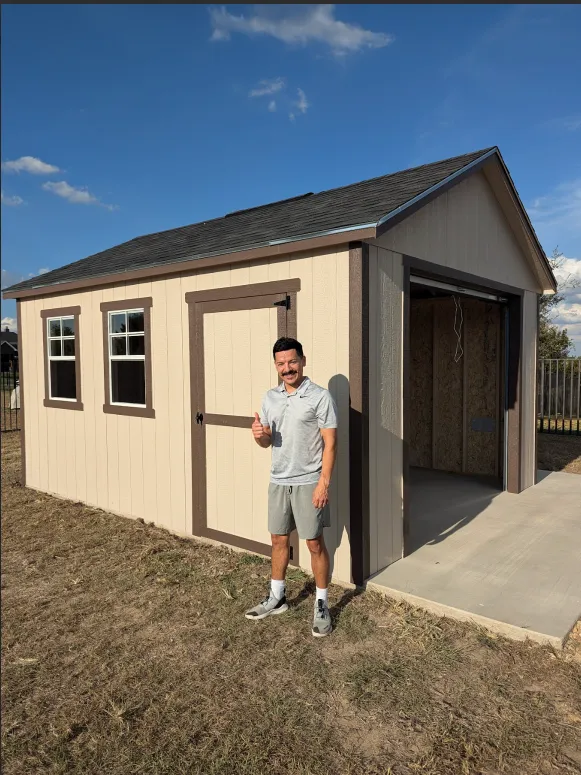
I get calls every month from people who bought the wrong shed. Sometimes they bought too small. Sometimes they went cheap and now the thing is falling apart. Sometimes they put it in the wrong spot and now it floods every time it rains. These are expensive mistakes that could have been avoided with a little planning upfront.
After 15 years of building custom storage sheds across Fort Worth, Denton and North Texas I have seen every mistake you can make. I have also torn apart sheds that failed and I know exactly why they failed. This guide is everything I wish people knew before they bought their first shed.
Mistake 1: Buying Too Small
This is the number one regret I hear. Someone buys a 10x12 thinking it will be plenty. Six months later they are calling me asking if we can add on to it. Sometimes we can. Sometimes they just wasted money on a shed that does not work for them.
Here is what happens. You measure your riding mower and it fits in a 10x12 with room to spare. Great. But you forgot about the push mower, the weed eater, the leaf blower, the gas cans, the extension cords, the bags of fertilizer, the holiday decorations, the patio furniture cushions and all the other stuff that ends up in a shed. Suddenly that 10x12 is packed to the ceiling and you cannot find anything.
My rule is simple. Figure out what you need to store right now. Then add 30 percent. That sounds like a lot but trust me you will fill it. And here is the thing about shed pricing. Going from a 10x12 to a 12x16 does not double the cost. You get 60 percent more space for maybe 30 percent more money. The cost per square foot actually goes down as the shed gets bigger.
Customers in Rhome and Azle with larger properties almost always go 12x16 or bigger. They have the space and they know they will use it. Check our shed size guide for specific recommendations based on what you plan to store.
Mistake 2: Ignoring Local Rules Until It Is Too Late
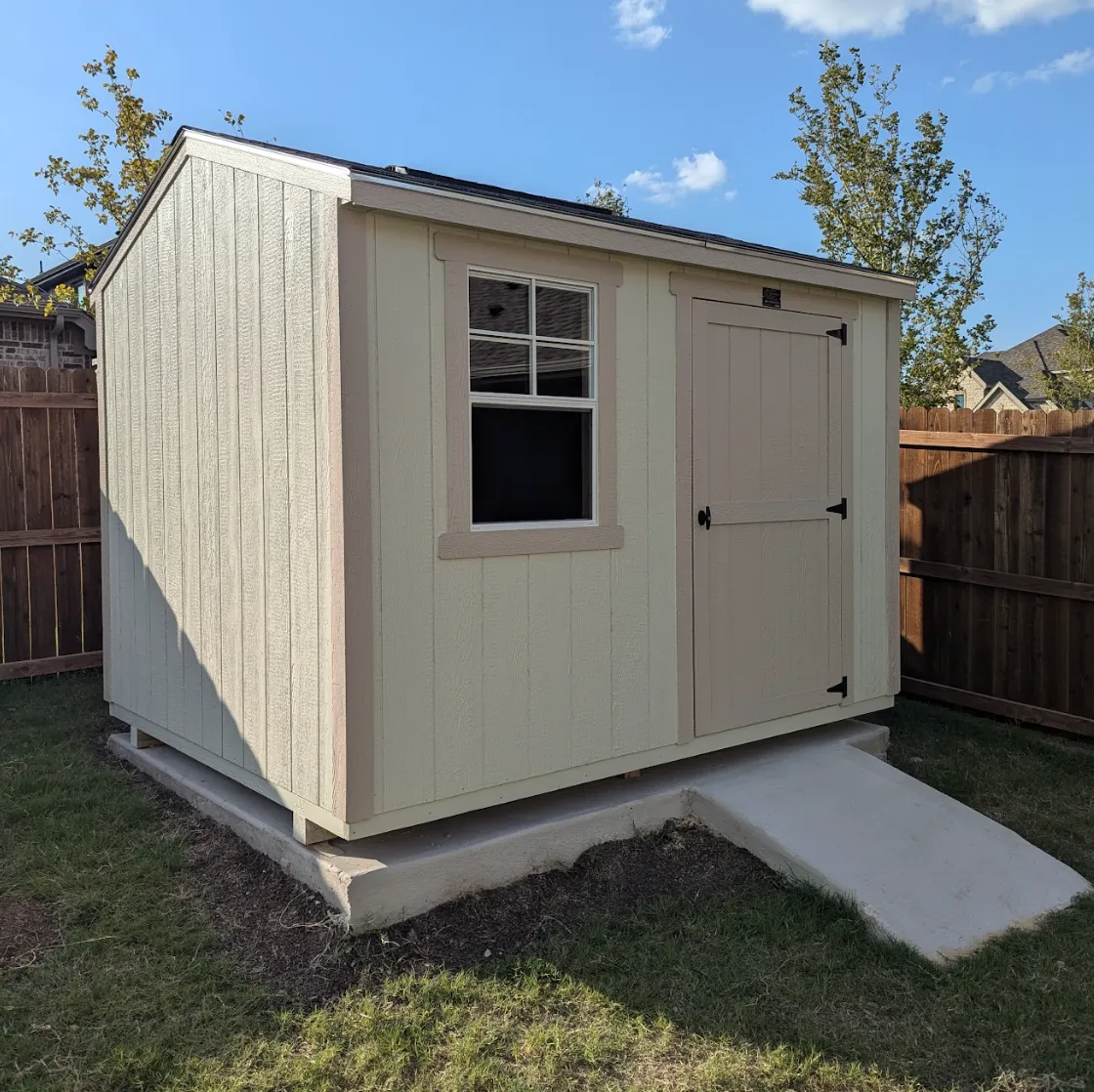
I have seen people forced to tear down sheds they just built because they violated setback requirements. I have seen HOAs demand that sheds be repainted or relocated. I have seen the city show up and red tag a shed because nobody pulled a permit. All of this is avoidable.
Before you order anything you need to know the rules. Most cities require sheds to be a certain distance from property lines. That distance varies but 5 to 10 feet is common. Some cities require permits for sheds over a certain size. Some do not require permits at all. The only way to know is to call your local building department and ask.
If you have an HOA then you have another layer of rules. Many HOAs restrict shed size, placement, colors and materials. Some require approval before you build. Get this sorted out before you spend money. I have had customers order a shed and then find out their HOA will not allow it. That is a frustrating situation for everyone.
We can help navigate this. We know the rules in Fort Worth, Denton, Bridgeport and most of North Texas. But ultimately you need to verify what applies to your specific property.
Mistake 3: Putting the Shed in the Wrong Spot
Location matters more than most people realize. I have seen sheds placed in low spots that flood every time it rains. I have seen sheds tucked so far back in the yard that nobody wants to walk out there to get anything. I have seen sheds positioned where they bake in full afternoon sun and turn into ovens.
Think about drainage first. Water needs to flow away from your shed not toward it. If you put the shed in a low spot where water collects then you are asking for problems. The floor will rot. The foundation will shift. Mold will grow inside. Pick a spot that is slightly elevated or at least level with good drainage.
Think about access next. You are going to walk to this shed regularly. If it is at the far corner of your property you will be less likely to put things away properly. Closer to the house or to where you actually use the equipment makes more sense. Also think about getting large items in and out. Can you roll a riding mower from the shed to the lawn without going through a narrow gate?
Sun exposure matters too. A shed that sits in full afternoon sun gets brutally hot inside during Texas summers. Some shade from trees or the house helps. But too much shade means moisture problems. Morning sun and afternoon shade is usually the sweet spot. Read our location selection guide for more details.
Mistake 4: Cheaping Out on the Foundation
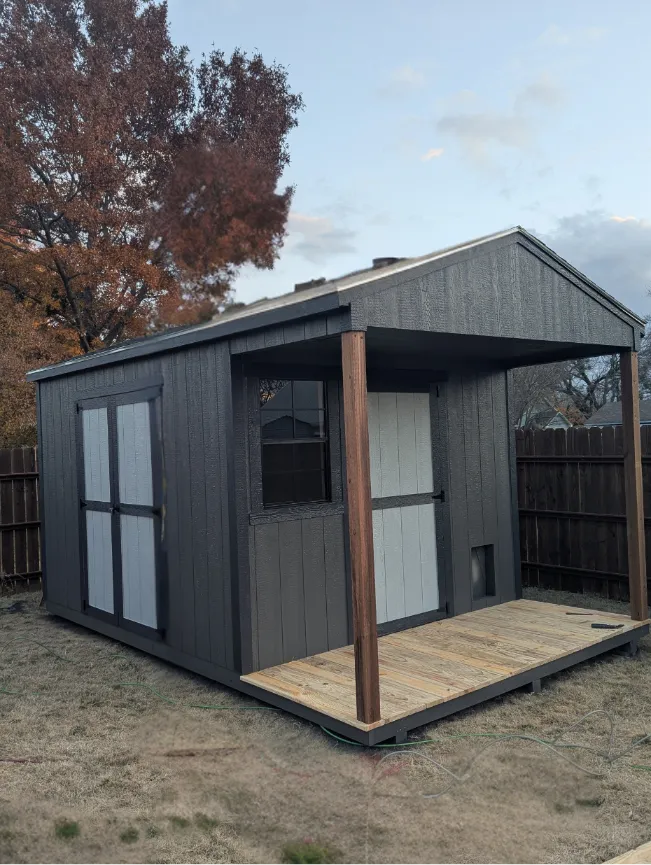
Your shed is only as good as what it sits on. I cannot tell you how many sheds I have seen with doors that will not close properly, floors that bounce when you walk on them and walls that are visibly out of square. Every single time the problem traces back to a bad foundation.
The ground in North Texas is challenging. We have expansive clay soil that swells when wet and shrinks when dry. That movement will destroy a shed that is not properly supported. You cannot just set a shed on the ground and expect it to last.
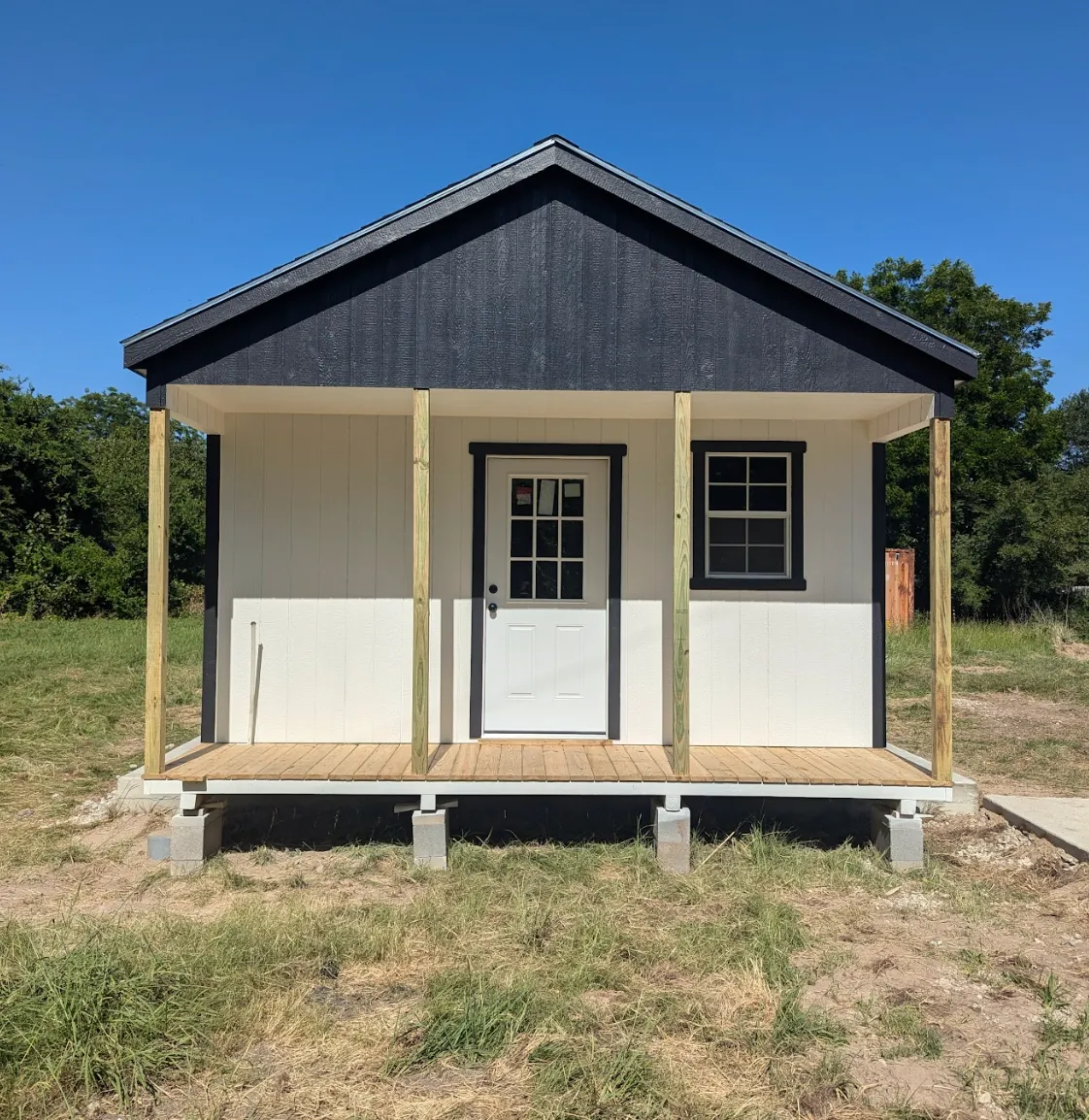
At minimum you need concrete blocks or piers at regular intervals. The ground underneath needs to be level and compacted. There needs to be space for air circulation under the floor to prevent moisture buildup. For larger sheds or sheds that will hold heavy equipment a concrete pad is worth considering.
Customers in Bridgeport and Decatur deal with particularly challenging soil. We pay extra attention to foundation work in those areas because we know what happens when you do not.
Mistake 5: Using the Wrong Floor Materials
The floor takes more abuse than any other part of your shed. You are rolling heavy equipment across it. You are dropping tools on it. You are tracking in dirt and moisture. If you use the wrong materials the floor will fail long before the rest of the shed.
Standard plywood is not good enough for a shed floor. It absorbs moisture and delaminates. It is not strong enough for heavy loads. Within a few years you will have soft spots and eventually holes. I have seen floors fail in sheds that were otherwise in great shape.
Pressure treated plywood is the minimum for a wood floor. It resists moisture and insects. For sheds that will hold heavy equipment like riding mowers or tractors you want thicker material. Three quarter inch treated plywood on 16 inch center joists handles most residential uses.
For workshop sheds where you will be standing for long periods or rolling heavy equipment around consider a concrete floor. It costs more upfront but it is virtually indestructible. It also stays cooler in summer which matters if you spend time in your shed. Check our flooring guide for more options.
Mistake 6: Forgetting About Ventilation
A sealed up shed is a disaster waiting to happen. In Texas heat an unventilated shed can reach 140 degrees inside. That heat damages paint, plastics, electronics and anything else sensitive to temperature. It also makes the space completely unusable for any kind of work.
Moisture is the other problem. Without airflow humidity builds up inside. That humidity condenses on metal tools and causes rust. It promotes mold growth on wood and fabric. It creates that musty smell that never goes away. I have opened sheds that smelled like a locker room because there was no ventilation.
Every shed needs at least passive ventilation. Gable vents at the peak of each end wall allow hot air to escape. Ridge vents along the roofline work even better. Soffit vents at the eaves let cooler air in at the bottom while hot air exits at the top. This creates natural airflow without any power.
If you plan to use your shed as a workshop or spend any time inside then add operable windows. Being able to open windows on opposite walls creates cross ventilation that makes a huge difference. A turbine vent on the roof pulls hot air out actively and costs nothing to operate.
Mistake 7: Ignoring Security
Your shed probably holds thousands of dollars worth of equipment. Riding mowers, power tools, bicycles, sports equipment. Thieves know this. An unsecured shed is an easy target.
The cheap locks that come with most sheds are worthless. A determined thief can defeat them in seconds. You need a quality padlock on a reinforced hasp that is bolted through the door with carriage bolts. The bolt heads should be on the inside where they cannot be accessed.
Door construction matters too. A hollow core door can be kicked in easily. Solid wood or steel doors resist forced entry. If you have windows consider security film that holds the glass together even when broken. Or use glass block that lets in light but cannot be easily breached.
Visibility helps with security. A shed that is visible from your house or from the street is less attractive to thieves than one hidden behind bushes. Motion sensor lights make people think twice about approaching at night. Some customers install cameras or alarm systems for high value contents.
Mistake 8: Buying the Cheapest Option
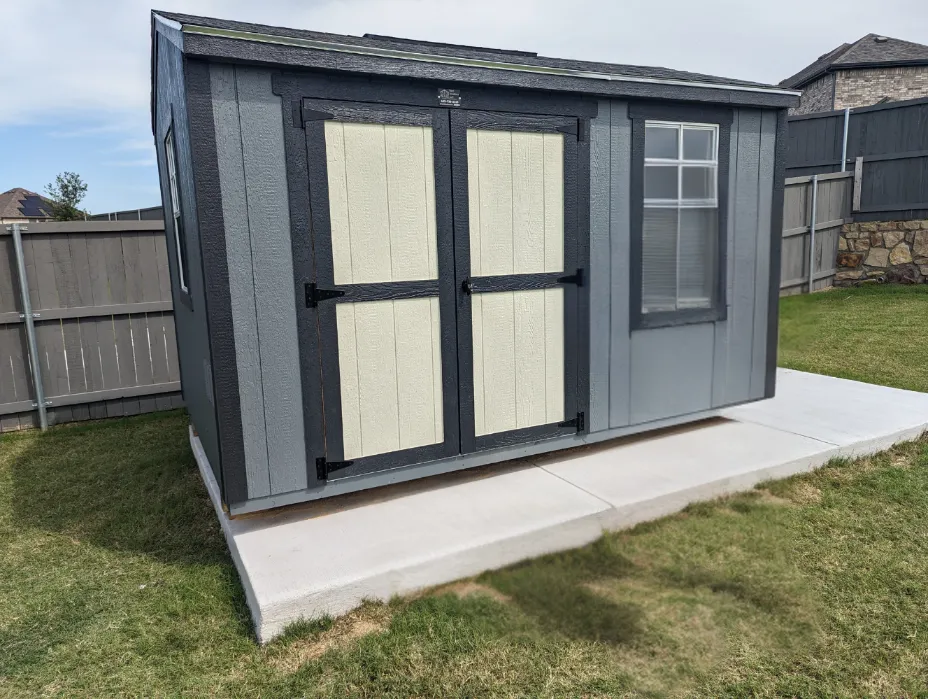
I understand that budget matters. But the cheapest shed is almost never the best value. Those $800 metal sheds from the big box store are cheap for a reason. They use thin gauge steel that dents and rusts. They have no floor so you are setting them on dirt. They have minimal ventilation and zero insulation. They are designed to last maybe five years.
Think about cost per year of use. A $800 shed that lasts 5 years costs $160 per year. A $4000 shed that lasts 25 years costs $160 per year. Same annual cost but you get a much better building for that money. And the quality shed probably lasts longer than 25 years with basic maintenance.
The cheap shed also does not protect your stuff as well. That riding mower you paid $3000 for is sitting in a building that leaks and has no climate control. The mower will wear out faster. The gas goes bad. Mice get in and chew the wiring. You end up spending more on repairs and replacement than you saved on the shed.
If budget is tight we offer financing options that make a quality shed affordable. Spreading payments over 24 or 36 months often costs less per month than you would spend replacing a cheap shed every few years.
The Bottom Line
Every one of these mistakes is avoidable with a little planning. Take your time. Think about what you actually need. Check the rules before you build. Choose quality over the lowest price. A well built shed serves you for decades. A poorly planned one becomes a constant headache.
We have built hundreds of sheds across Fort Worth, Denton, Rhome, Azle, Bridgeport and Decatur. We know what works and what does not. Happy to answer questions or help you plan the right shed for your property.
Ready to Do It Right?
Get a shed that lasts. We will help you avoid these mistakes and build something you are proud of.
- Call: (682) 730-2238
- See our work: Recent projects
- Get a quote: Contact form
- Browse options: Shed styles