Color might seem like pure aesthetics but for a storage shed sitting in the Texas sun your paint choice affects more than looks. The right color keeps your shed cooler, resists fading and can add years to the finish before repainting becomes necessary. Homeowners across Fort Worth, Denton and North Texas ask us about color choices all the time.
We have painted hundreds of A Frame sheds across the region—from affordable A-frame sheds to fully customized builds. Some colors hold up beautifully for a decade. Others start looking tired after three years. Here is what we have learned about choosing colors that last and why it matters for your investment.
Why Color Matters for Shed Longevity
Texas summers are brutal on exterior finishes. UV radiation breaks down paint pigments. Heat causes expansion and contraction that stresses coatings. Dark colors absorb more heat which accelerates both problems. Your backyard shed takes a beating every single day from May through September.
A shed painted dark brown in direct sun can hit surface temperatures of 160 degrees or higher. That heat transfers into the structure and stresses wood and paint alike. Meanwhile a light gray shed next door might stay 40 degrees cooler on the same afternoon. Customers in Rhome and Azle deal with full sun exposure and color choice makes a real difference.
The practical effects are clear. Dark colors fade faster, peel sooner and cook whatever you have stored inside. Light colors reflect heat, maintain their appearance longer and keep interiors more tolerable. Not rocket science but worth thinking about before you pick a color because you like how it looks on a paint chip.
Best Color Choices for Durability
Light Colors That Last
White and off-white reflect the most heat and show the least fading. Classic, clean, matches almost anything. The downside is dirt visibility—white shows every water stain and mud splash. Figure on pressure washing once a year to keep it looking sharp.
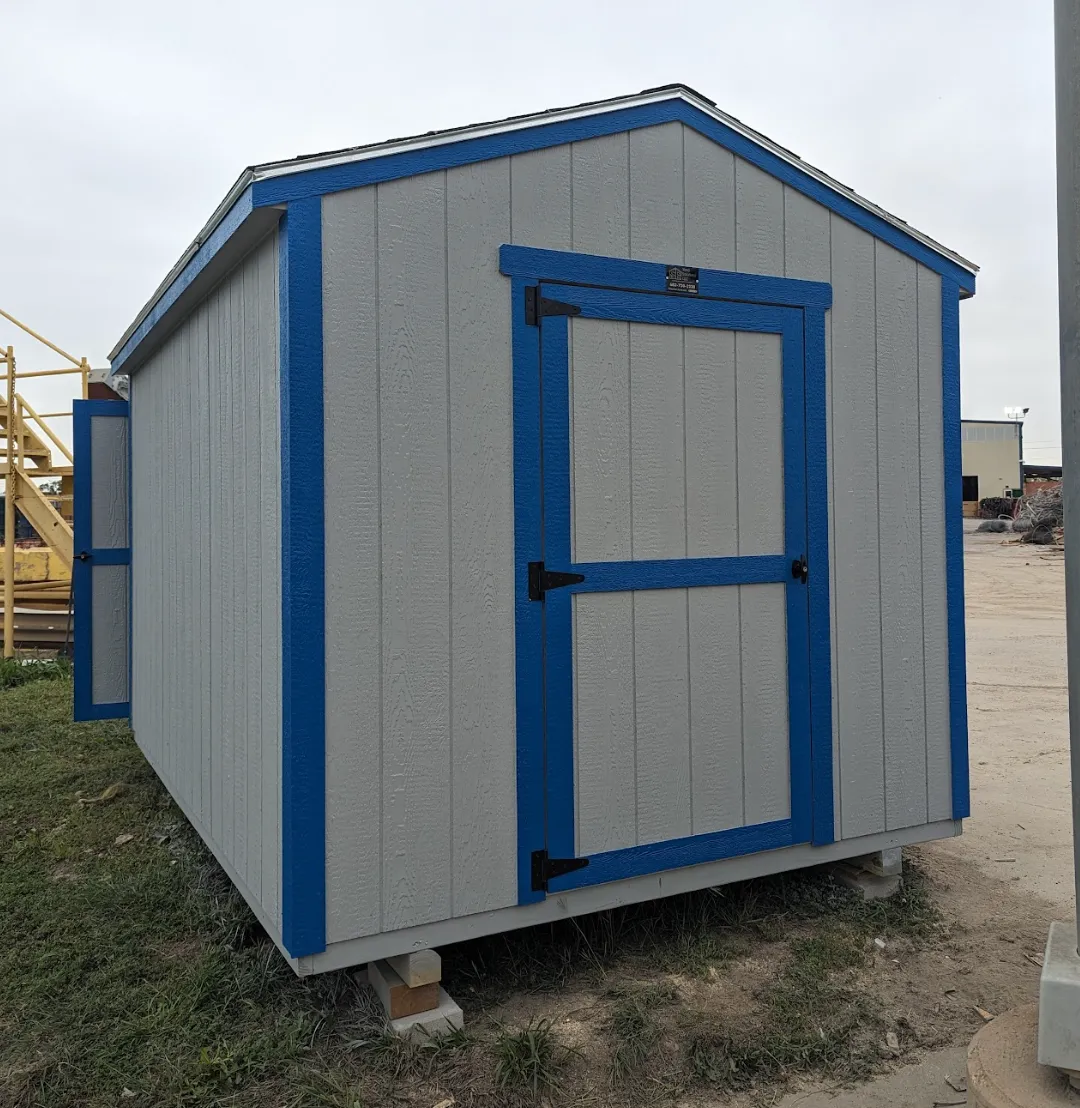
Light gray is our most popular recommendation. Hides dirt better than white while still reflecting significant heat. Looks good with almost any trim color. Fades gracefully—even after years of sun, a light gray shed still looks intentional rather than neglected.
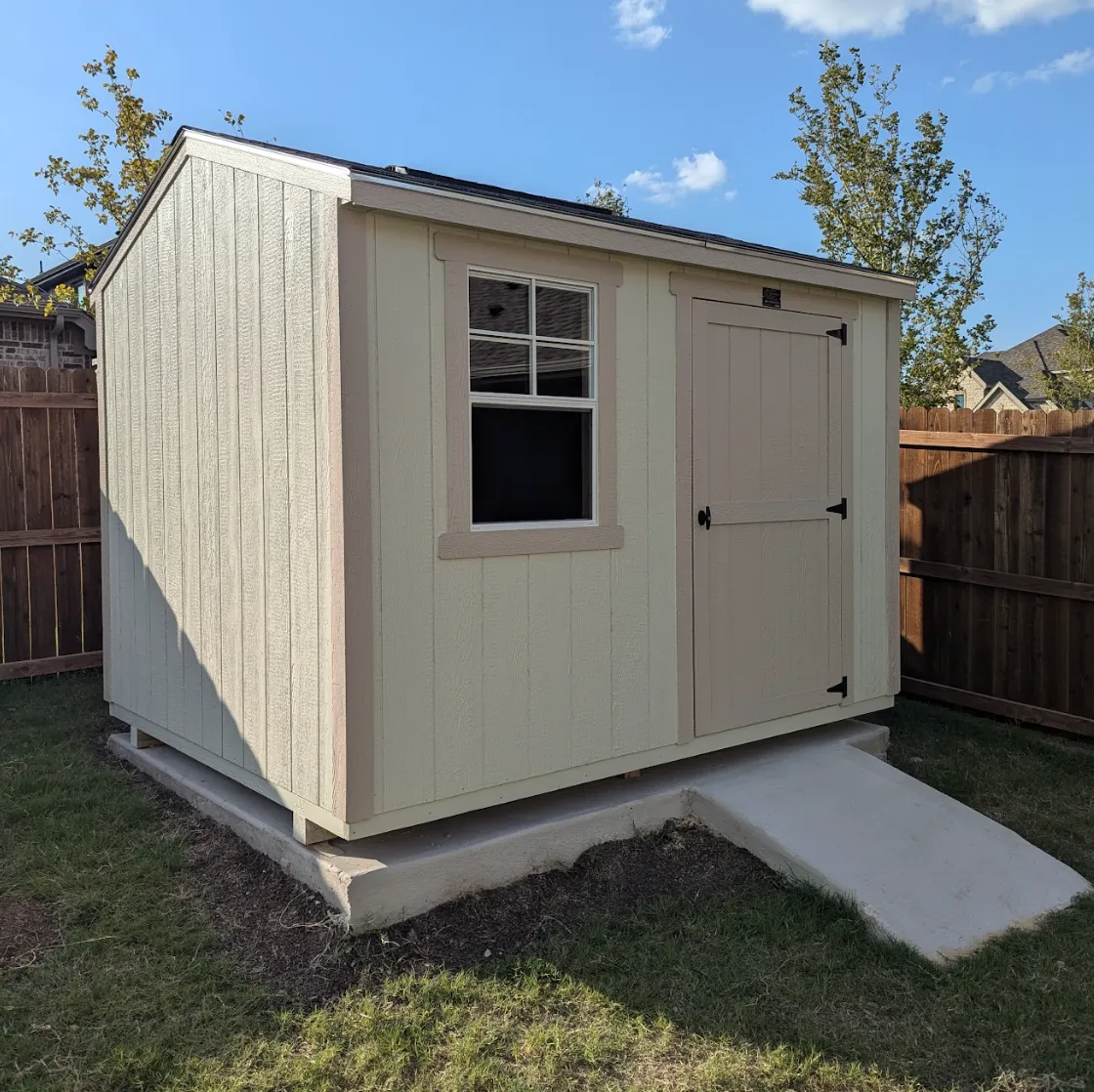
Tan and beige work well if you're matching earth tones or a stucco house. Decent heat reflection, good dirt hiding, natural appearance. Watch out for cheap paint in these colors—some tan pigments fade to pink undertones after sun exposure.
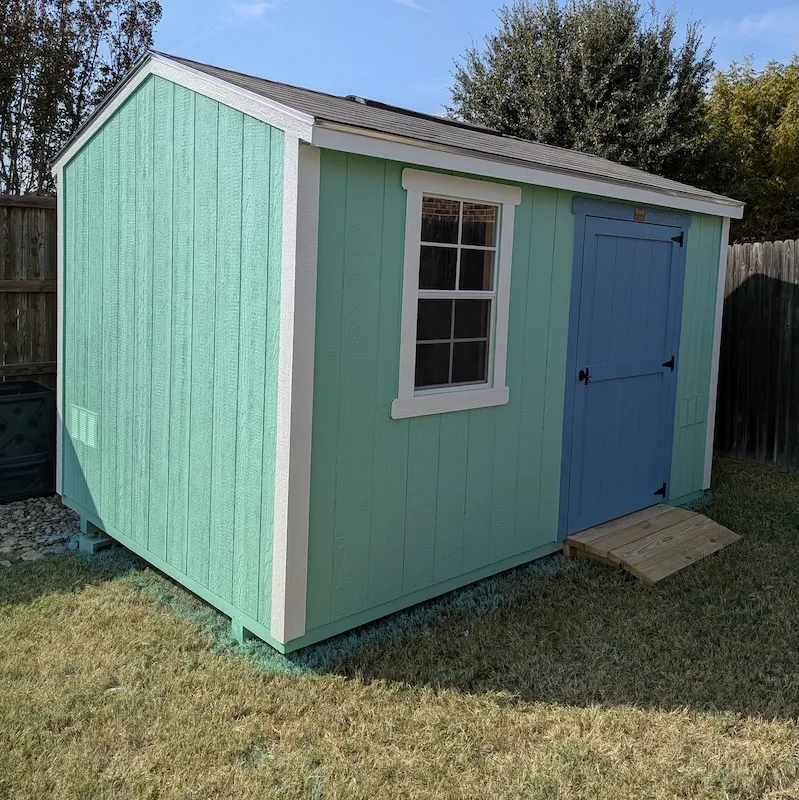
Light blue and sage green add character while staying in the reflective range. These colors do fade faster than neutrals, but the initial fade often stops at a pleasant weathered look rather than deteriorating further.
Colors That Work Harder
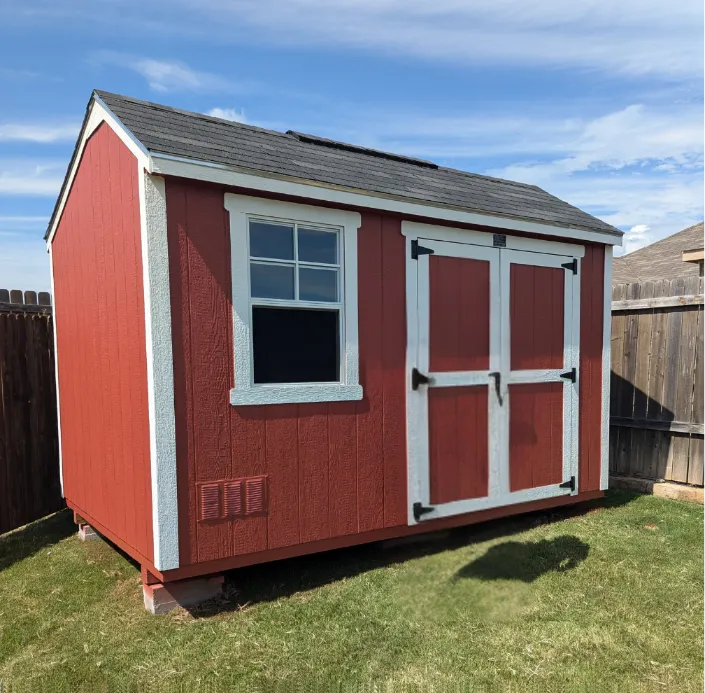
Medium tones—barn red, forest green, navy—can look fantastic but require more attention. They absorb more heat, fade more noticeably and typically need repainting two to three years sooner than light colors.
If you want a darker color, invest in premium paint with ceramic microspheres or infrared-reflective pigments. These technologies let you get darker aesthetics without as much heat absorption. Costs more but extends time between repaint jobs.
Colors to Think Twice About
Black and very dark browns look dramatic but suffer in our climate. Maximum heat absorption, fastest fading, most stress on the structure. If you go this dark, expect to repaint every 3-4 years and accept that interior temperatures will be brutal without serious climate control.
Consider Your Climate
Texas is not uniform. Coastal humidity affects paint differently than dry West Texas heat. North Texas gets enough freeze cycles to stress paint adhesion. Your specific microclimate matters and it varies even within the Fort Worth metro area.
Sheds in full sun all day face harsher conditions than sheds with afternoon shade from trees or buildings. South and west facing walls take the most abuse. You might even consider different trim colors for different exposures with darker accents on north walls where heat is not an issue. Customers in Bridgeport and Decatur often have more open properties with full sun exposure.
Humidity areas need paint with good moisture resistance. Dry areas prioritize UV resistance. Your paint supplier can recommend formulations for local conditions. Actually talk to them rather than just grabbing whatever is on sale.
Choose High Quality Paint or Siding
Color selection matters less than paint quality. A premium light gray will outperform a cheap white every time.
Look for 100% acrylic latex exterior paint with UV stabilizers. Avoid vinyl-acrylic blends—they're cheaper but don't hold up as well. Major brands (Sherwin-Williams, Benjamin Moore, Behr) all offer lines specifically designed for extreme conditions.
Application matters too. Proper surface prep, primer on bare wood and appropriate film thickness all affect longevity. Two coats minimum, applied in appropriate weather conditions. Cutting corners on application wastes money regardless of paint quality.
For the ultimate low-maintenance option, consider pre-finished siding like LP SmartSide or fiber cement. Factory finishes typically outlast field-applied paint by years.
Practical Tips for Color Selection
Match Your Home
Your shed should look like it belongs to your property, not like it wandered in from somewhere else. Pull colors from your house—match the trim, complement the siding, pick up an accent color from shutters or doors.
When in doubt, go neutral. A shed that matches your house blends in. A shed in a contrasting color becomes a focal point—which is only good if the shed deserves the attention.
Test Before Committing
Paint samples look different in store lighting than in outdoor sun. Buy sample sizes and paint test patches on the actual shed (or on boards you can hold against it). View the samples at different times of day—morning light, harsh noon sun, evening shade.
Colors also look different against different backgrounds. That gray you loved against white primer might look completely different against your green lawn or brown fence.
Think About Resale
Planning to sell the house eventually? Weird shed colors can become a negative. Neutral, well-maintained finishes appeal broadly. That bright orange shed that seemed fun at the time becomes a liability when buyers start commenting on it.
Balancing Style and Function
You do not have to sacrifice aesthetics for durability. Light colors come in endless shades. Gray ranges from almost white to almost blue. Tans span cream to chocolate. Pick something you like within the durable range rather than suffering with a color you hate just because it is practical.
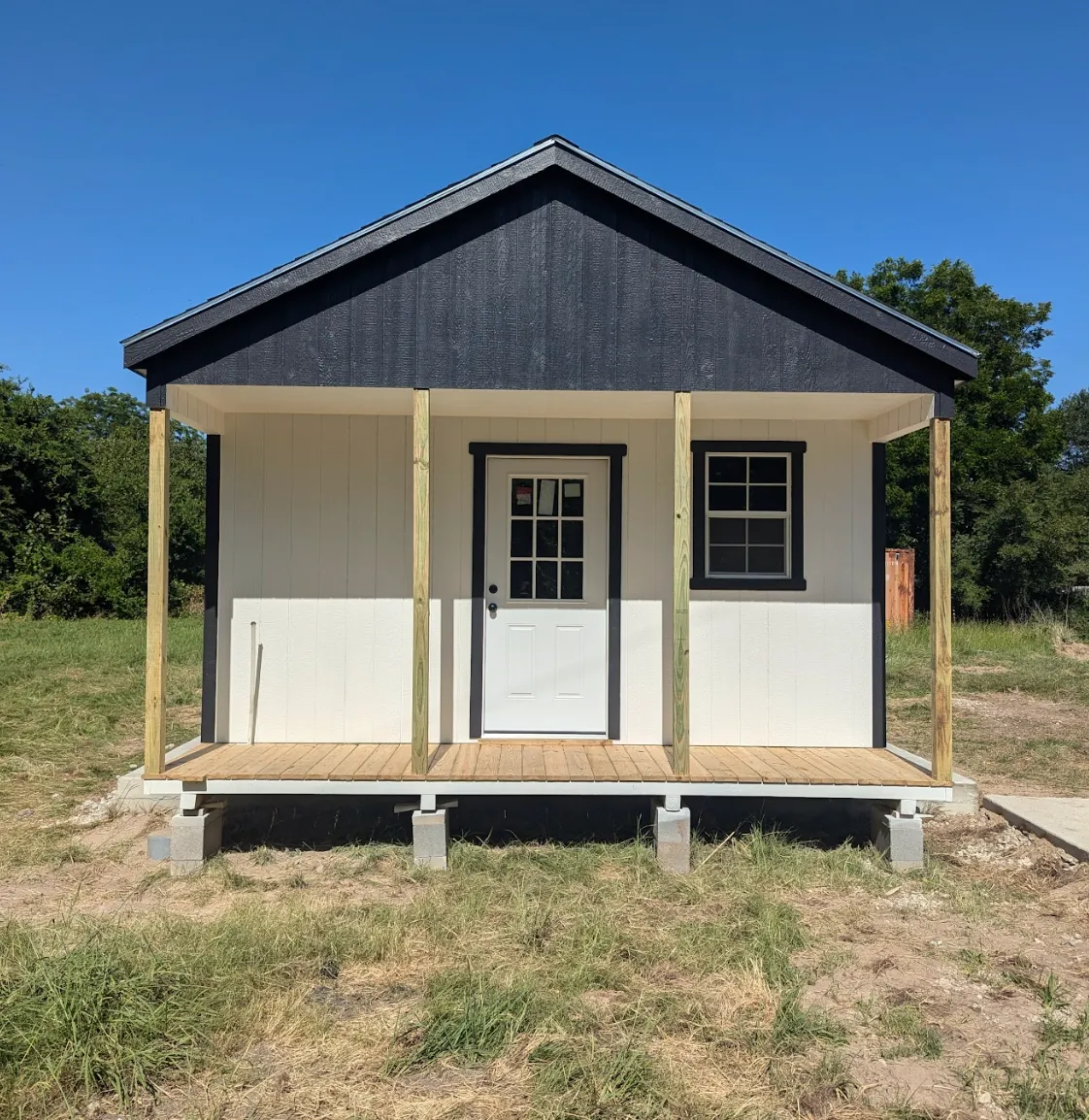
Trim and accent colors let you add personality without compromising the main body color. Dark green door on a light gray shed? Classic. Red trim on a white barn style building? Timeless. You can have character without cooking your shed. Our customers in Denton and Fort Worth get creative with color combinations all the time.
Making Your Choice
For A Frame sheds in Texas lighter colors generally mean longer lasting finishes and cooler interiors. See our guide to A-frame customization trends for more ways to personalize your shed. Light gray, off white, tan and sage green all offer good durability with room for personal style. These colors work well with most home exteriors and landscaping.
Whatever color you choose invest in quality paint and proper application. The difference between a paint job that lasts four years and one that lasts eight is not the color. It is the product and the prep work. We can help you choose colors that complement your home when you contact us for a quote on your new A Frame shed.
Ready to Build Your A-Frame Shed?
- See Our Work: Browse A-Frame shed projects
- A-Frame Details: Learn more about A-Frame sheds
- Where we build: Fort Worth, Denton, Decatur, Rhome, Bridgeport
- Contact Us: Call (682) 730-2238
Frequently Asked Questions
What color shed lasts longest?
Light colors—white, light gray, tan—reflect heat and resist fading better than dark colors. Light gray is often the best balance of durability, dirt-hiding and appearance.
How often should I repaint my shed?
With quality paint and good prep, light-colored sheds typically go 8-10 years between repaints. Dark colors may need attention every 4-6 years. Cheap paint or poor application shortens these intervals significantly.
Can I paint my shed a dark color?
Yes, but expect faster fading, hotter interior temperatures and more frequent repainting. Use premium paint with infrared-reflective technology if going dark to minimize these drawbacks.
Should my shed match my house?
Not necessarily match exactly, but coordinate. Pull colors from your house—complement the siding, match the trim or pick up accent colors. A coordinated shed adds value; a clashing one detracts.
What's the best paint for a shed in Texas?
100% acrylic latex exterior paint from major brands (Sherwin-Williams, Benjamin Moore, Behr). Look for formulations with UV stabilizers and heat-reflective properties. Avoid cheap vinyl-acrylic blends.