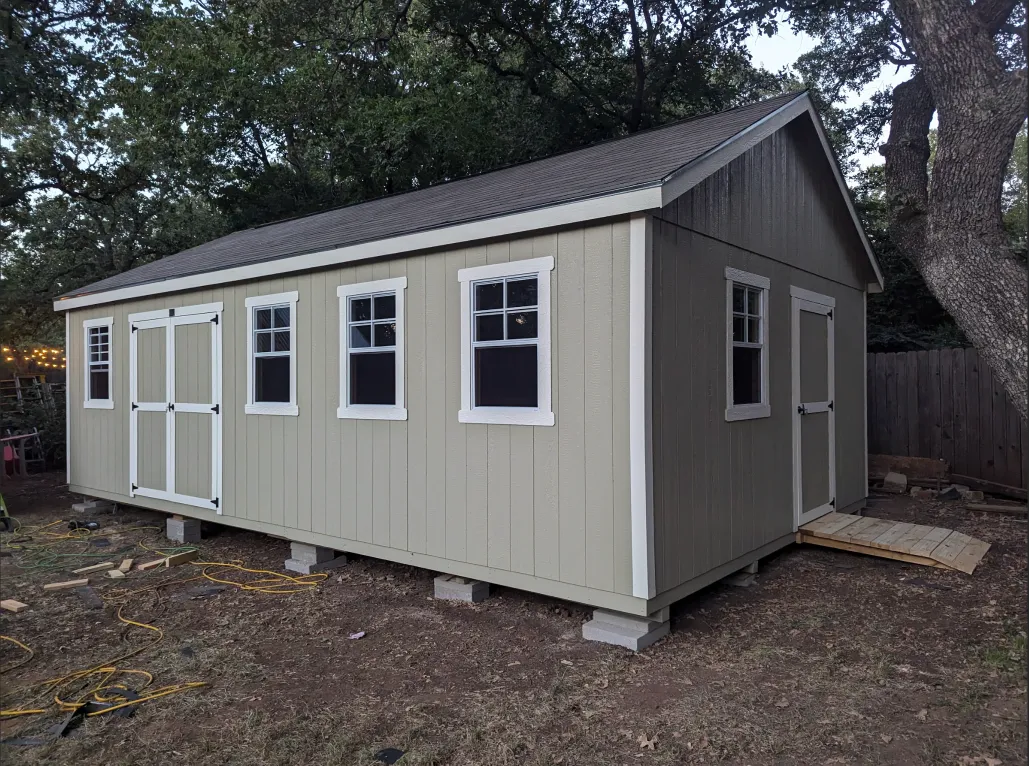
I have been building sheds in North Texas for over 15 years and the A Frame remains my most requested style. There is a reason for that. The design has been around for generations because it works. But not all A Frames are created equal and I have seen plenty of homeowners waste money on sheds that fall apart in a few years or do not actually fit their needs.
This guide is everything I wish someone had told me when I was starting out. Real information about what to look for, what to avoid and how to get the most value for your money. Looking for budget-friendly options? See our guide to affordable A-frame sheds. Whether you are in Fort Worth, Denton or anywhere in North Texas, this applies to you.
Why the A Frame Design Actually Works in Texas
Let me explain what happens during a Texas thunderstorm. Rain comes down hard and fast. Wind gusts hit 60 mph. Hail the size of golf balls pelts everything in sight. I have watched cheap flat roof sheds get destroyed in a single storm while A Frames next door came through without a scratch.
The steep roof pitch is not just for looks. Water runs off immediately instead of pooling. That pooling is what causes leaks. I have torn apart sheds with water damage and it always starts at a flat spot where water sat too long. The A Frame eliminates that problem entirely.
The triangular shape also handles wind differently than a box. Wind flows over and around it rather than catching it like a sail. Customers in Rhome and Azle deal with serious wind and they specifically request A Frames for this reason.
Heat is the other factor. Texas summers are brutal. That peaked roof creates a natural chimney effect. Hot air rises to the peak and escapes through ridge vents while cooler air gets pulled in through soffit vents. A properly vented A Frame can be 15 to 20 degrees cooler inside than a shed with poor airflow.
Figuring Out What Size You Actually Need
This is where most people mess up. They buy too small because they are trying to save money. Then six months later they are calling me asking if we can add on to their shed. Sometimes we can. Sometimes they just wasted money on a shed that does not work for them.
Here is how I help customers figure out the right size. First, walk through your garage and make a list of everything you want to move to the shed. Measure the big stuff. Your riding mower is probably 5 feet long and 4 feet wide. Your workbench needs 6 feet of wall space. Those Christmas decorations take up more room than you think.
Now add walking space. You need to actually get to your stuff. A shed crammed full with no room to move is useless. I tell people to add 30 percent to whatever they think they need. That sounds like a lot but five years from now you will thank yourself.
Here is what actually fits in each size based on hundreds of sheds I have built:
8x10 (80 square feet) works for push mower, basic garden tools, a few storage bins. This is a tight space. Good for someone with a small yard and minimal equipment. Not enough room for a workbench.
10x12 (120 square feet) fits a riding mower OR a workbench with tools, not both comfortably. Add some shelving and you have decent storage. This is our entry level size for most homeowners.
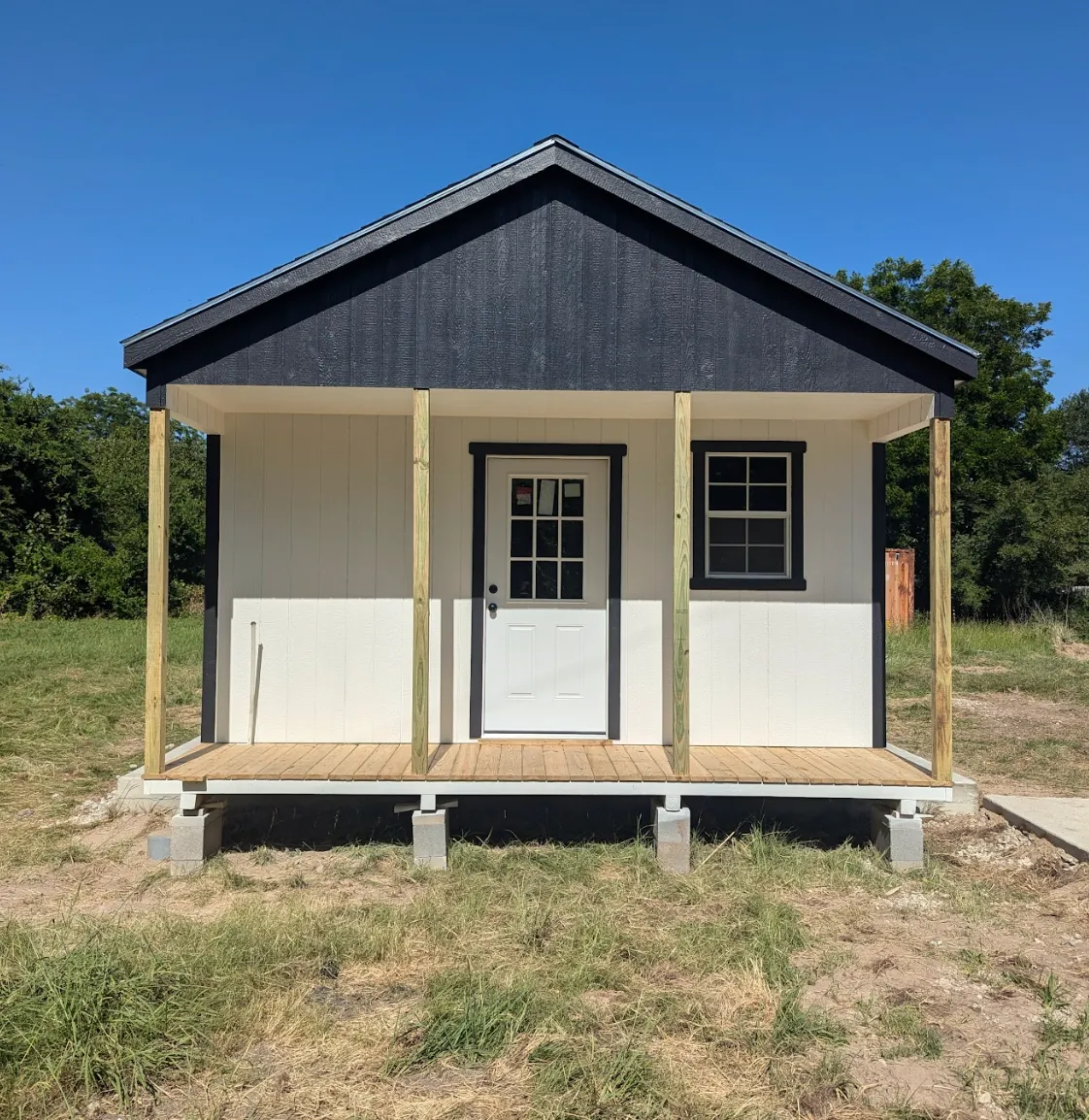
12x16 (192 square feet) is where things get comfortable. Riding mower, workbench, wall of shelving, room to actually work on projects. This is our most popular size in Bridgeport and Decatur where people have more property and more equipment.
12x20 and larger becomes a real workshop or garage alternative. Multiple zones for different purposes. Loft storage overhead. Room for a second workbench or equipment staging area.
Check our detailed size guide for more specifics.
The Loft Advantage Nobody Talks About
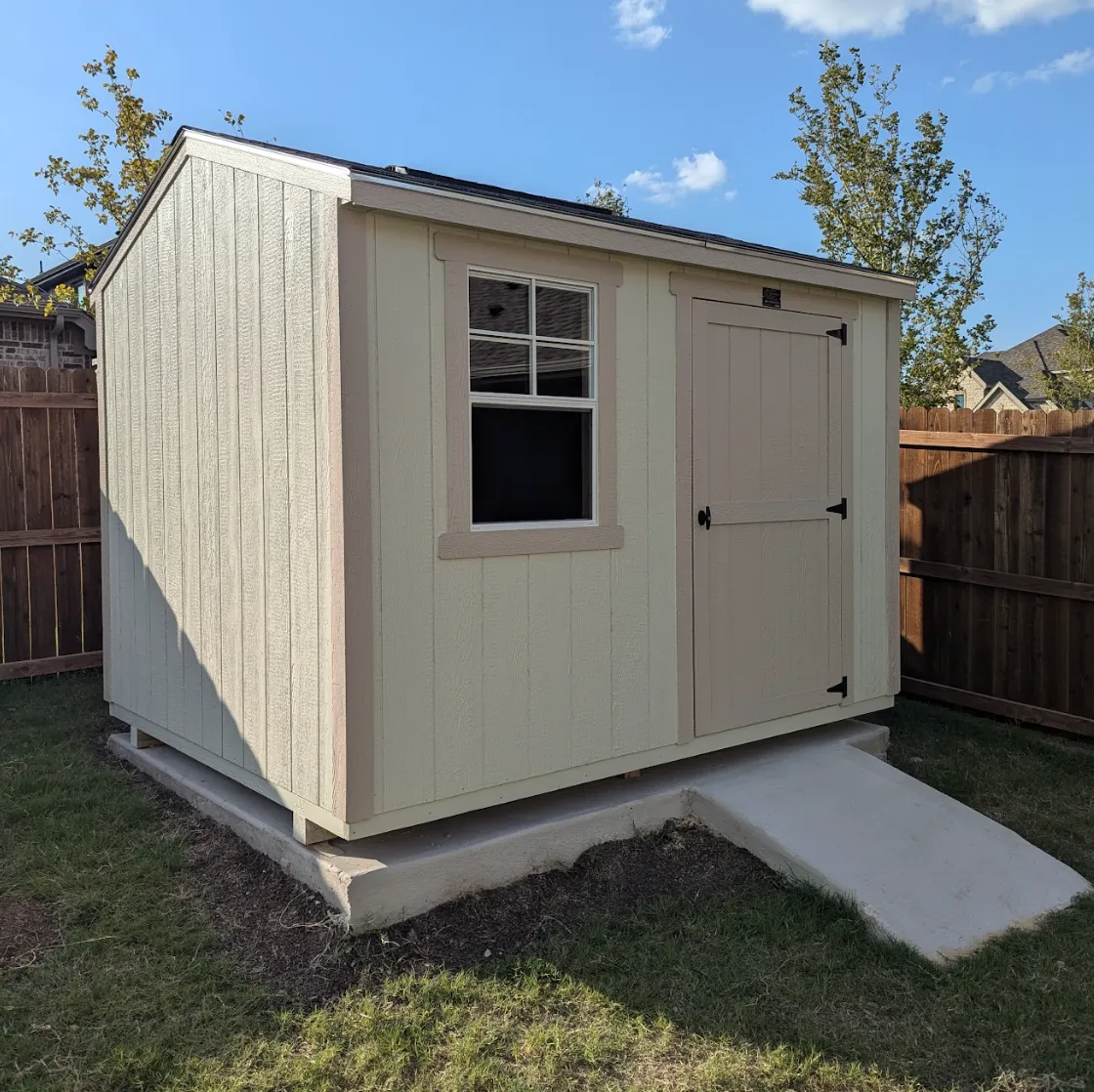
This is one of my favorite things about A Frames. That steep roof creates usable space overhead that you do not get with other shed styles. A loft in a 12x16 A Frame gives you an extra 60 to 80 square feet of storage without increasing your footprint.
Think about what goes in a loft. Holiday decorations you access twice a year. Camping gear for summer trips. Kids sports equipment from seasons past. Boxes of stuff you need to keep but rarely touch. All of that goes up top, leaving your main floor clear for the things you use daily.
We build lofts with real 2x6 floor joists rated for storage weight. I have seen lofts in cheap sheds that are just plywood laid across ceiling joists. Those sag and eventually fail. Ours hold hundreds of pounds safely.
Materials That Last vs Materials That Fail
I am going to be direct here. The materials in your shed determine whether it lasts 5 years or 25 years. I have torn apart failed sheds and the story is always the same. Untreated lumber that rotted. Thin metal roofing that rusted through. Cheap hinges that broke. Particle board floors that turned to mush.
Here is what we use and why:
Pressure treated lumber for all ground contact and framing. The treatment prevents rot and insect damage. Regular lumber in contact with Texas humidity starts breaking down within a few years. Treated lumber lasts decades.
LP SmartSide or similar engineered siding instead of T1-11 plywood. SmartSide is treated to resist moisture, rot and termites. It holds paint better and does not delaminate like cheap plywood siding. Costs more upfront but you are not repainting or replacing it in five years.
29 gauge metal roofing minimum. Thinner metal dents from hail and develops rust spots faster. We use metal with a 40 year paint warranty. It reflects heat better than shingles and handles Texas storms without issue.
Heavy duty hardware throughout. Galvanized hinges, quality door handles, proper fasteners. The little stuff matters. A shed door that sags because the hinges failed is frustrating and expensive to fix.
On Site Construction vs Prefab Delivery
There are two ways to get a shed. Have it built somewhere else and delivered on a truck, or have it built right on your property. Both work but they have different tradeoffs.
Prefab delivery is faster. The shed shows up mostly complete and gets set in place. But you are limited by what fits on a trailer and what can navigate your driveway, gates and yard. Anything over about 12 feet wide becomes a problem. Tight access means the shed might not fit at all.
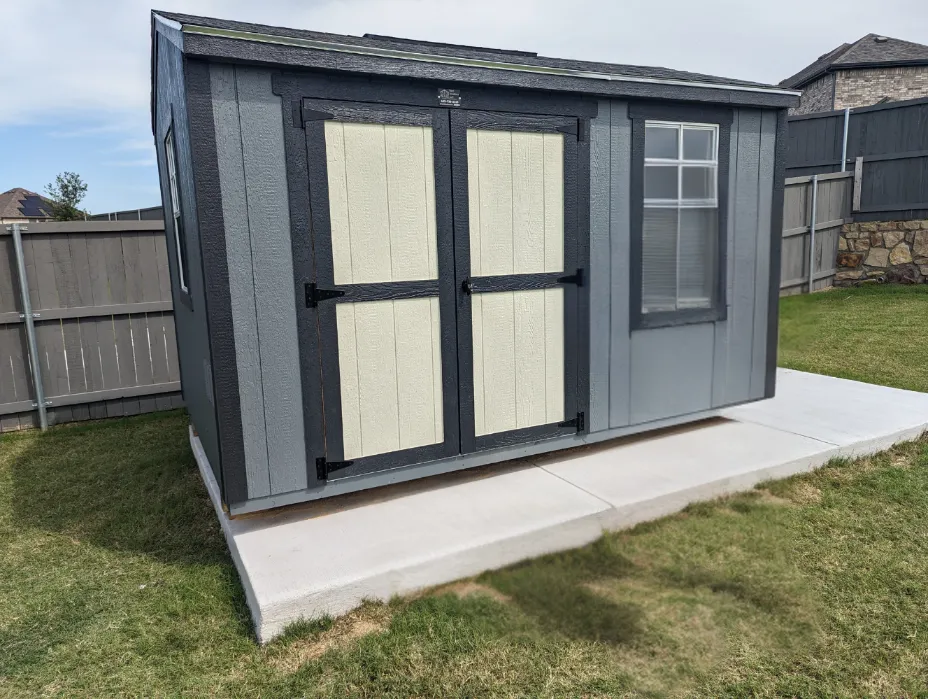
On site construction takes longer, usually 2 to 4 days depending on size. But there are no size limits. We can build a 16x40 shed in your backyard if that is what you need. We can work around trees, slopes, tight spaces. The shed gets built exactly where you want it.
On site also means we can adjust as we go. If you decide mid build that you want the door on the other side, we can do that. If the ground is not quite level, we handle it. Prefab sheds are what they are.
For most customers in Fort Worth and Denton with normal residential lots, either option works. For rural properties in Bridgeport or Decatur with larger buildings or difficult access, on site is usually the better choice.
What Add Ons Are Actually Worth It
Every shed builder will try to sell you upgrades. Some are worth every penny. Others are nice to have but not essential. Here is my honest take:
Worth it:
Loft if you have the ceiling height. Extra storage at minimal cost. Windows for natural light if you will spend time in the shed. Check out current A-frame customization trends for more ideas. Workbench if you do projects. Ramp instead of steps if you are rolling equipment in and out. Proper ventilation for Texas heat.
Nice but optional:
Electrical if you need power tools or lighting. Adds cost but transforms the shed into a real workspace. Porch for covered outdoor area. Looks great and gives you shade but adds to footprint and price. Extra doors for access from multiple sides.
Skip unless you really need it:
Fancy cupolas and weathervanes. They look nice but add nothing functional. Premium paint colors that cost extra. Regular colors work fine. Excessive trim details that just add cost.
Real Pricing So You Know What to Expect
I am not going to give you vague ranges. Here is what A Frame sheds actually cost in the current market, built with quality materials:
| Size | Base Price | With Common Add Ons |
|---|---|---|
| 8x10 | $2,800 to $3,200 | $3,500 to $4,000 |
| 10x12 | $3,800 to $4,500 | $4,800 to $5,500 |
| 12x16 | $5,200 to $6,200 | $6,500 to $7,800 |
| 12x20 | $6,500 to $7,800 | $8,000 to $9,500 |
| 12x24 | $7,800 to $9,200 | $9,500 to $11,500 |
Common add ons in that second column include loft, two windows, workbench and ramp. Electrical adds $400 to $800 depending on complexity. These prices are for quality construction with the materials I described above. You can find cheaper but you get what you pay for.
We offer financing that makes larger sheds more accessible. Spreading payments over 24 or 36 months often lets people get the size they actually need instead of settling for too small.
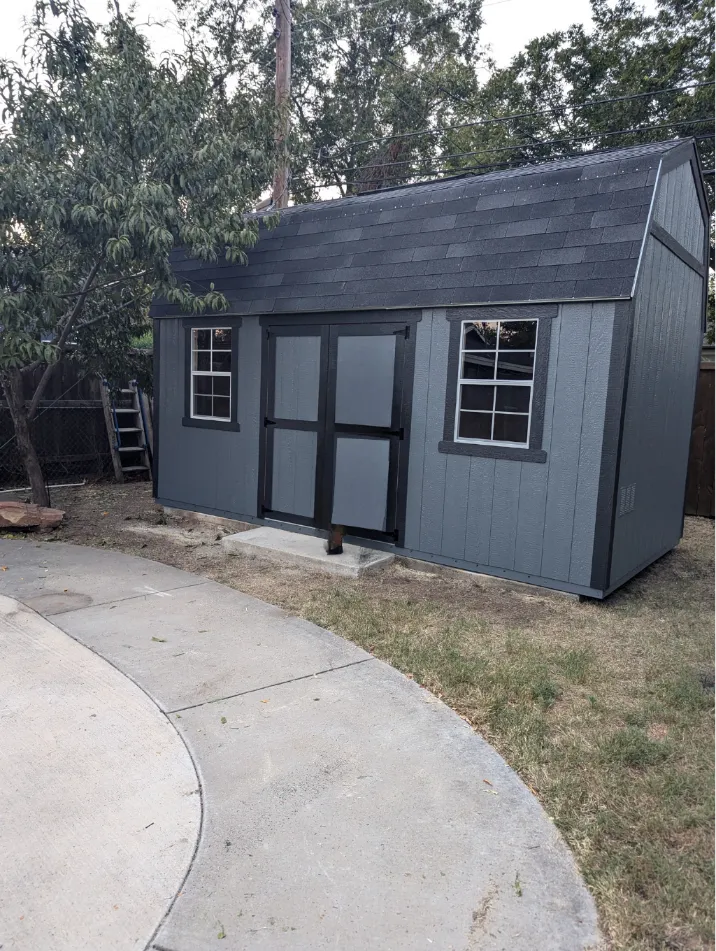
Questions to Ask Any Shed Builder
Before you buy from anyone, ask these questions:
What lumber do you use for framing? If they say untreated or do not know, walk away.
What gauge is your metal roofing? Anything thinner than 29 gauge is going to have problems.
How do you anchor the shed? It needs to be secured against wind. Concrete blocks at minimum, ground anchors for larger buildings.
What is your warranty? We warranty our workmanship for 5 years. Materials have their own manufacturer warranties. Anyone not offering at least a year warranty on labor is not confident in their work.
Can I see examples of your work? Any legitimate builder has photos or addresses of completed projects. We have dozens in our portfolio.
Ready to Get Started?
I have built A Frame sheds all over North Texas. Happy to answer questions or give you a quote based on exactly what you need.
- Call: (682) 730-2238
- See examples: Our completed projects
- Get a quote: Contact form
- Payment options: Financing available