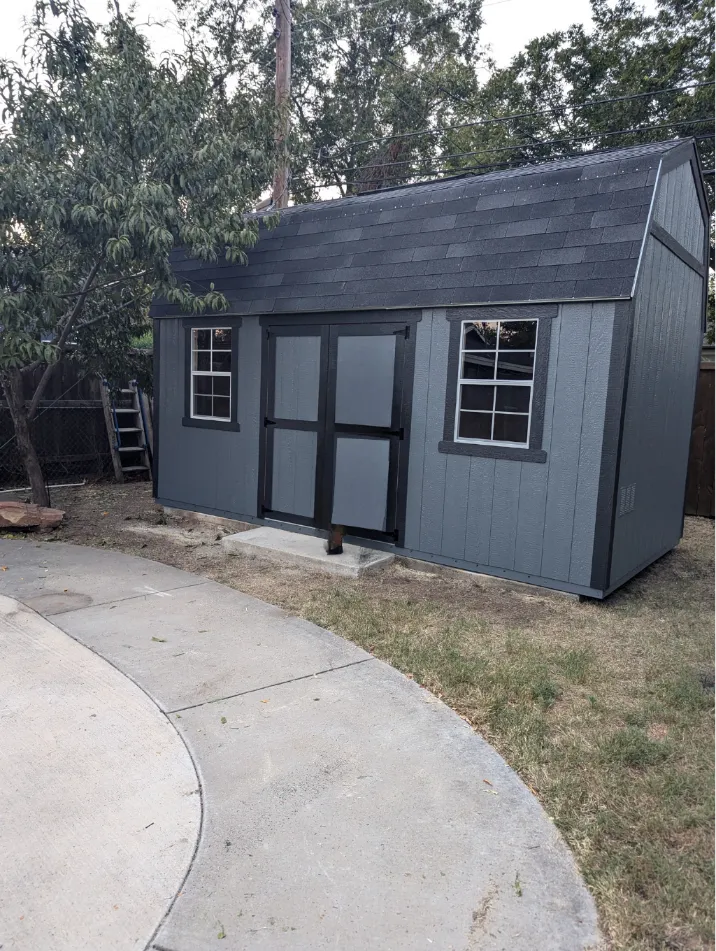
You are about to spend several thousand dollars on a storage shed. That is real money. And the decisions you make now will determine whether that shed serves you well for the next 25 years or becomes a frustrating problem within 5. I have been building custom sheds across Fort Worth, Denton and North Texas for over 15 years. I have seen what works and what does not.
Most people rush this decision. They see a shed they like, get a quote and sign a contract. Then they spend years dealing with a shed that is too small, in the wrong spot or falling apart because it was built with cheap materials. Do not be that person. Take the time to think through these 8 factors before you buy anything.
1. What Are You Actually Going to Use It For
This sounds obvious but most people do not think it through carefully. They say storage and leave it at that. But storage of what? How you answer that question changes everything about your shed.
If you are storing lawn equipment you need wide doors that a riding mower can fit through. You need a reinforced floor that can handle the weight. You probably want a ramp instead of steps. You might want hooks for hanging the weed eater and leaf blower.
If you want a workshop you need electrical outlets and good lighting. You need a workbench and probably some pegboard for tools. You might want windows for natural light. You definitely want enough ceiling height to stand comfortably.
If you are thinking about a home office or hobby space you need insulation and climate control. You need multiple windows. You might want interior finishes that look more like a room than a shed.
The point is that different uses require different features. A shed designed for lawn equipment storage is not the same as a shed designed for woodworking. Figure out your primary use first. Then think about secondary uses. Then design accordingly.
Also think ahead. What will you need in 5 years? In 10 years? Kids grow up and their stuff changes. Hobbies evolve. Jobs change. A shed that works for your life today might not work for your life in a decade. Build in some flexibility.
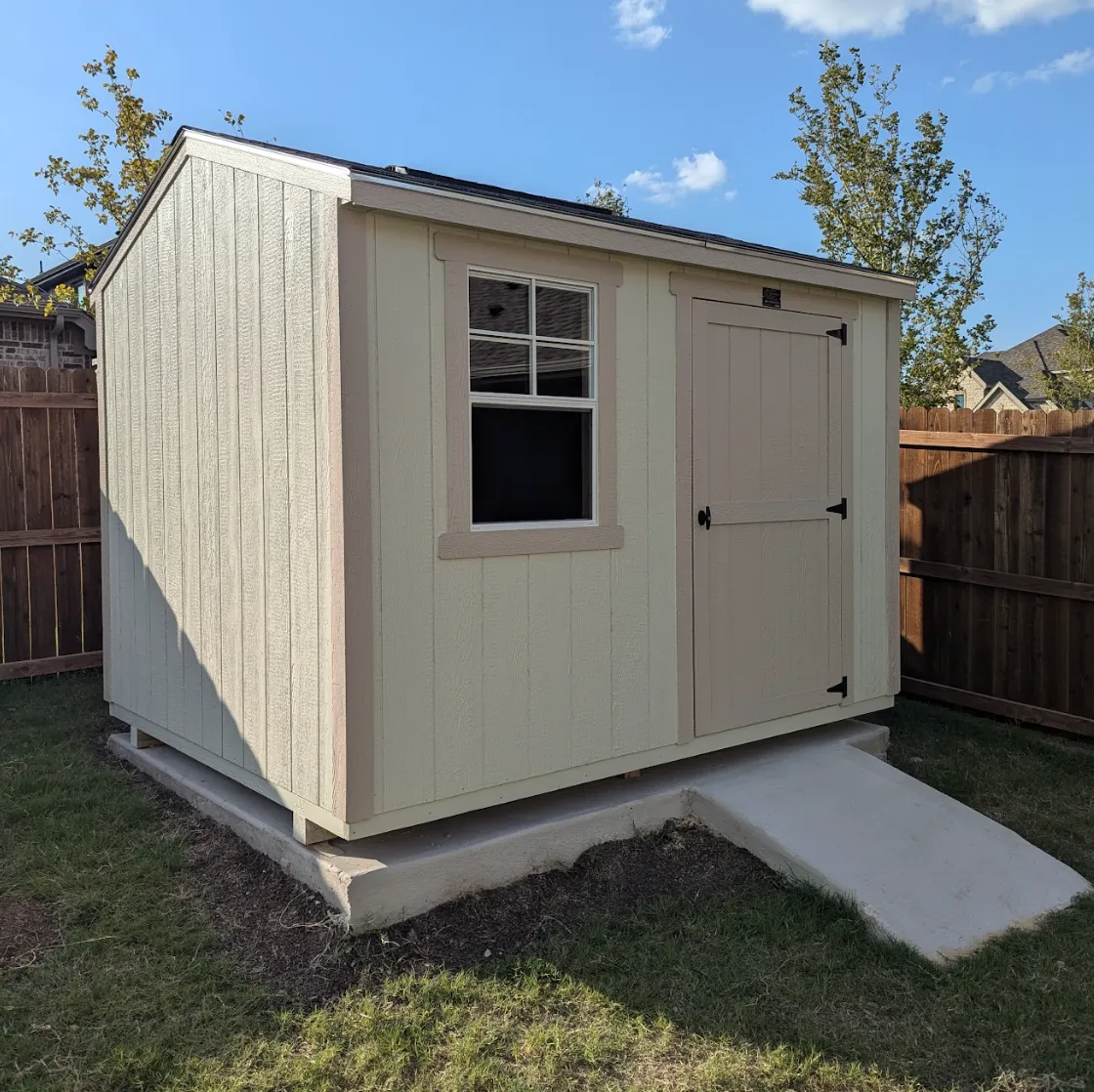
2. Where Exactly Are You Going to Put It
Location is one of those things that seems simple until you get it wrong. Then you are stuck with a shed in a bad spot for the next 25 years.
Start with drainage. Walk your property after a heavy rain. Where does water collect? Where does it flow? You do not want your shed in a low spot where water pools. That leads to foundation problems, floor rot and moisture damage to everything inside. Pick a spot that is level or slightly elevated with good drainage away from the structure.
Think about access. How will you get to this shed every day? If it is at the far corner of your property you will be less likely to put things away properly. Closer to the house or to where you actually use the equipment makes more sense. Our guide to choosing the ideal location covers this in detail. Also think about getting large items in and out. Can you roll a riding mower from the shed to the lawn without going through a narrow gate or around tight corners?
Check your setback requirements. Most cities require sheds to be a certain distance from property lines. That distance varies but 5 to 10 feet is common. Some areas have different requirements for front, side and rear setbacks. If you have an HOA they might have additional restrictions. Verify all of this before you commit to a location.
Consider sun exposure. A shed that sits in full afternoon sun gets brutally hot inside during Texas summers. Some shade from trees or the house helps. But too much shade means moisture problems and mold. Morning sun and afternoon shade is usually the sweet spot. Customers in Rhome and Azle with larger properties have more flexibility here.
Read our detailed guide on selecting the ideal shed location.
3. How Big Does It Really Need to Be
Property owners from Springtown to Fort Worth face the same decision—how much shed do you actually need? This is where most people mess up. They buy too small because they are trying to save money. Then six months later they are cramped and frustrated with no good options.
Here is how to figure out the right size. Make a list of everything you plan to store. Measure the big items. Your riding mower is probably 5 feet long and 4 feet wide. Your workbench needs 6 feet of wall space. Those holiday decorations take up more room than you think.
Now add walking space. You need to actually get to your stuff. A shed crammed full with no room to move is useless. You should be able to walk to any item without moving five other things first.
Now add 30 percent. I know that sounds like a lot. But trust me you will fill it. Everyone fills it. Five years from now you will have more stuff than you have today. Build for that future.
Here is what actually fits in common sizes. An 8x10 holds hand tools, a push mower and some storage bins. That is about it. A 10x12 fits a riding mower OR a workbench with tools, not both comfortably. A 12x16 is where things get comfortable. Riding mower, workbench, wall of shelving, room to actually work on projects. A 12x20 or larger becomes a real workshop or garage alternative.
Check our detailed size guide for more specifics.
4. How Will You Handle Texas Heat
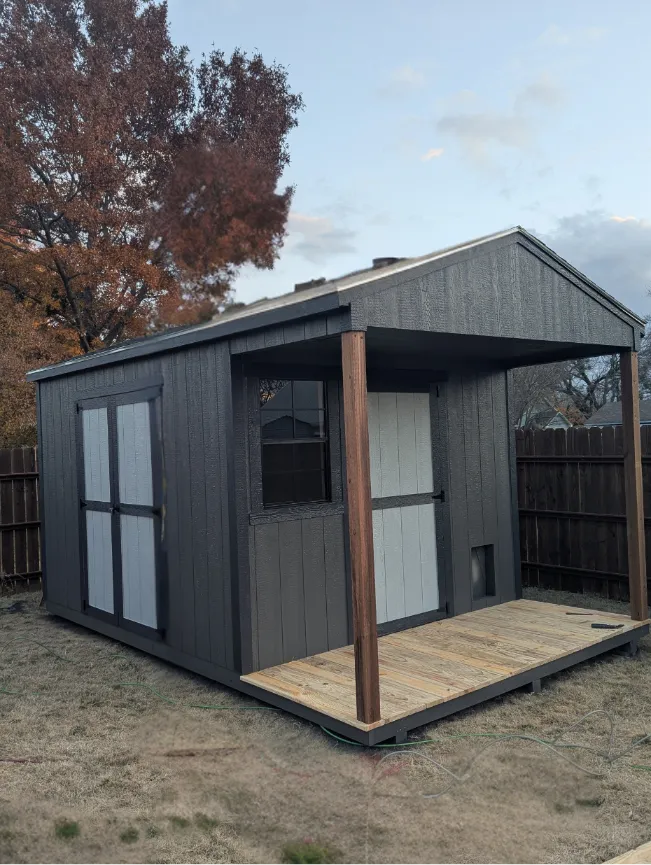
Ventilation is not optional in Texas. Without it your shed becomes an oven. I have measured temperatures over 140 degrees inside unventilated sheds in July. That heat damages paint, plastics, electronics and anything else sensitive to temperature. It also makes the space completely unusable for any kind of work.
Every shed needs passive ventilation at minimum. Gable vents at the peak of each end wall allow hot air to escape. Ridge vents along the roofline work even better. Soffit vents at the eaves let cooler air in at the bottom while hot air exits at the top. This creates natural airflow without any power.
If you plan to use your shed as a workshop or spend any time inside then add operable windows. Being able to open windows on opposite walls creates cross ventilation that makes a huge difference. A turbine vent on the roof pulls hot air out actively and costs nothing to operate.
For a home office, hobby space or anywhere you will spend extended time you need insulation and climate control. A mini split AC and heat unit is the most efficient option. It provides both heating and cooling without ductwork. Insulation in the walls, ceiling and floor keeps the conditioned air inside. This turns a basic shed into a comfortable year round space.
Customers in Bridgeport and Decatur deal with serious summer heat. Proper ventilation or climate control is not a luxury out here. It is a necessity. Learn more about insulation options.
5. What Should the Floor Be Made Of
The floor takes more abuse than any other part of your shed. You are rolling heavy equipment across it. You are dropping tools on it. You are tracking in dirt and moisture. If you use the wrong materials the floor will fail long before the rest of the shed.
Standard plywood is not good enough. It absorbs moisture and delaminates. It is not strong enough for heavy loads. Within a few years you will have soft spots and eventually holes.
Pressure treated plywood is the minimum for a wood floor. It resists moisture and insects. For sheds that will hold heavy equipment like riding mowers or tractors you want thicker material. Three quarter inch treated plywood on 16 inch center joists handles most residential uses.
For workshop sheds where you will be standing for long periods or rolling heavy equipment around consider a concrete floor. It costs more upfront but it is virtually indestructible. It also stays cooler in summer which matters if you spend time in your shed.
Check our flooring guide for more details on each option.
6. How Will You Keep Your Stuff Safe
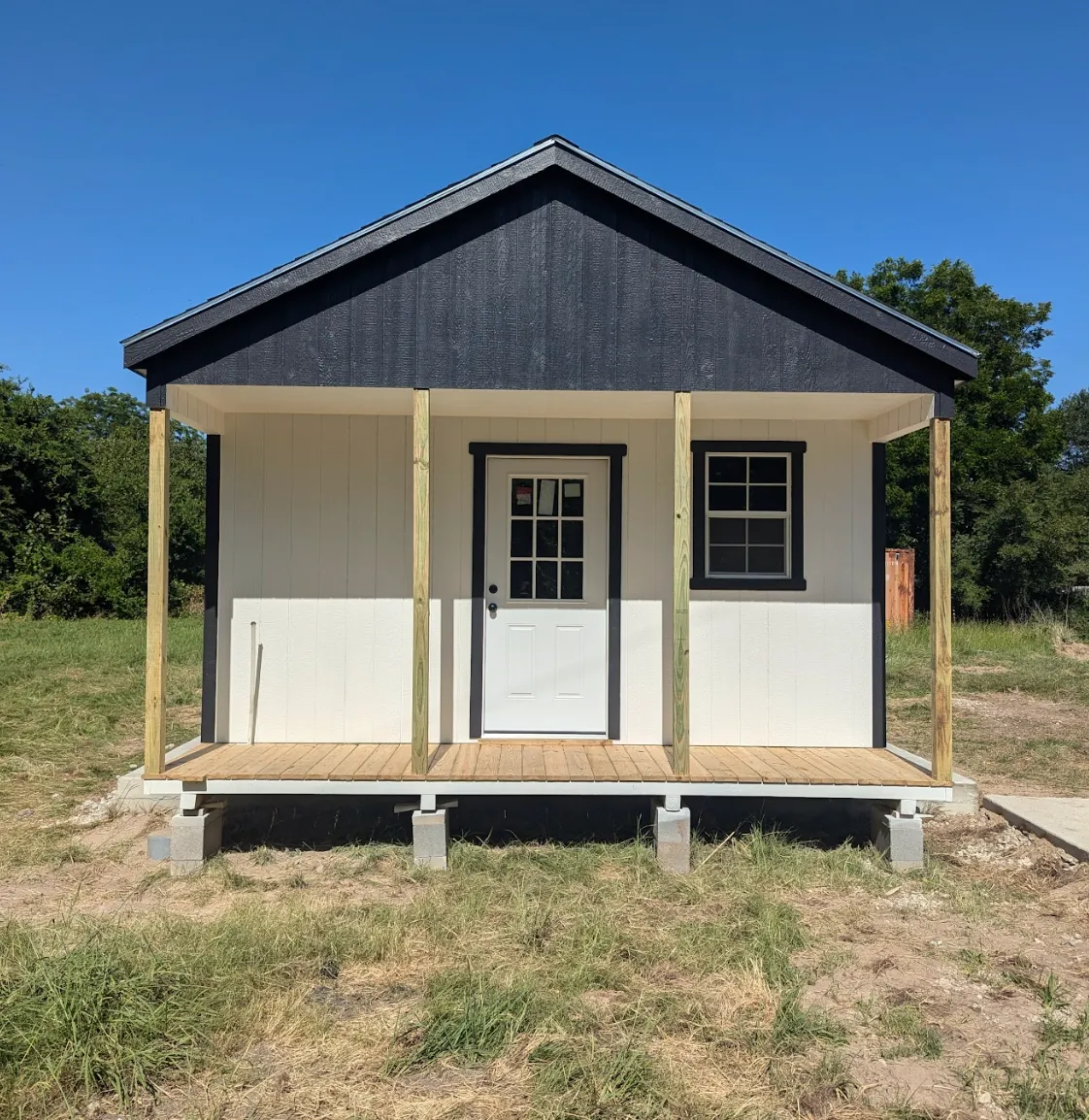
Your shed probably holds thousands of dollars worth of equipment. Riding mowers, power tools, bicycles, sports equipment. Thieves know this. An unsecured shed is an easy target.
The cheap locks that come with most sheds are worthless. A determined thief can defeat them in seconds. You need a quality padlock on a reinforced hasp that is bolted through the door with carriage bolts. The bolt heads should be on the inside where they cannot be accessed.
Door construction matters too. A hollow core door can be kicked in easily. Solid wood or steel doors resist forced entry. If you have windows consider security film that holds the glass together even when broken.
Visibility helps with security. A shed that is visible from your house or from the street is less attractive to thieves than one hidden behind bushes. Motion sensor lights make people think twice about approaching at night.
Some customers with high value contents install cameras or alarm systems. That might be overkill for a basic storage shed but it makes sense for a workshop full of expensive tools.
7. How Should It Look
Your shed is going to be part of your property for decades. It should look like it belongs there, not like an afterthought you picked up at the hardware store.
Match the siding color to your house or choose a complementary color. Match the roof style and color. Add trim details that tie it together. A shed that coordinates with your home looks intentional and adds value to your property.
Style matters too. An A Frame shed has that classic look that works with almost any home. A barn style shed gives you extra headroom and a rustic aesthetic. A garden shed can be charming with the right details.
Think about landscaping around the shed. Some gravel or stepping stones leading to the door. Maybe some plants along the sides. A well landscaped shed looks like a feature of your property rather than just a box in the backyard.
Check out our guide on best color choices for shed longevity.
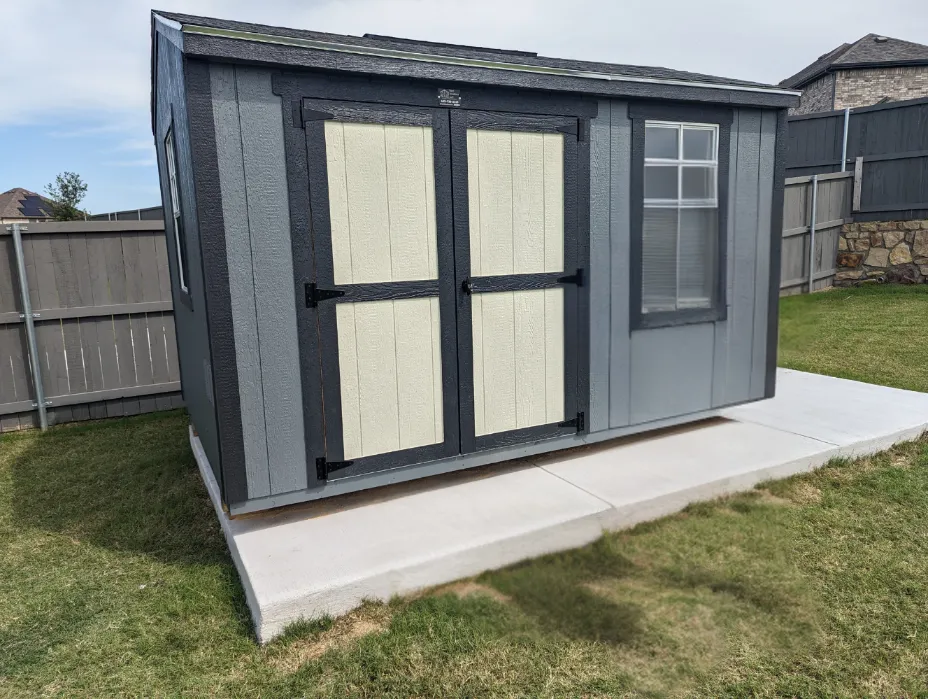
8. How Should It Be Built
There are two ways to get a shed. Have it built somewhere else and delivered on a truck or have it built right on your property. Both work but they have different tradeoffs.
Prefab delivery is faster. The shed shows up mostly complete and gets set in place. But you are limited by what fits on a trailer and what can navigate your driveway, gates and yard. Anything over about 12 feet wide becomes a problem. Tight access means the shed might not fit at all.
On site construction takes longer, usually 2 to 4 days depending on size. But there are no size limits. We can build a 16x40 shed in your backyard if that is what you need. We can work around trees, slopes, tight spaces. The shed gets built exactly where you want it.
On site also means we can adjust as we go. If you decide mid build that you want the door on the other side we can do that. If the ground is not quite level we handle it. Prefab sheds are what they are.
We build on site across Fort Worth, Denton, Bridgeport, Decatur, Rhome, Azle and all of North Texas.
Making the Right Decision
A custom storage shed is a significant investment. Take the time to think through each of these 8 factors. Get them right and you end up with a building that serves you well for decades. Get them wrong and you are stuck with an expensive problem.
We are happy to help you think through these decisions. No pressure, no sales pitch. Just honest advice from people who have been building sheds for a long time. Contact us to discuss your project or call (682) 730-2238.
Ready to Get Started?
We build custom storage sheds throughout North Texas. Let us help you get it right the first time.
- Call: (682) 730-2238
- See our work: Recent projects
- Browse options: Shed styles
- Financing: Payment plans available