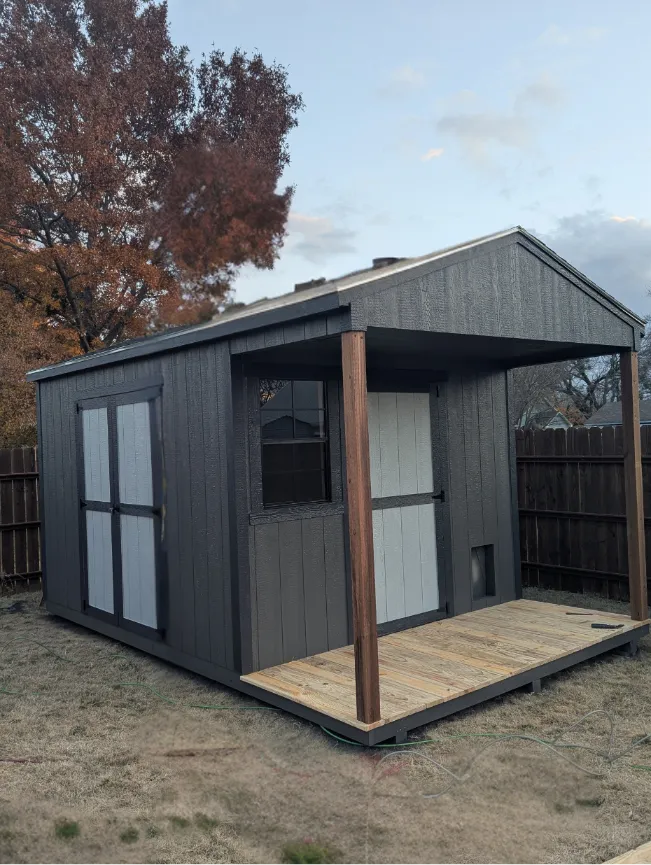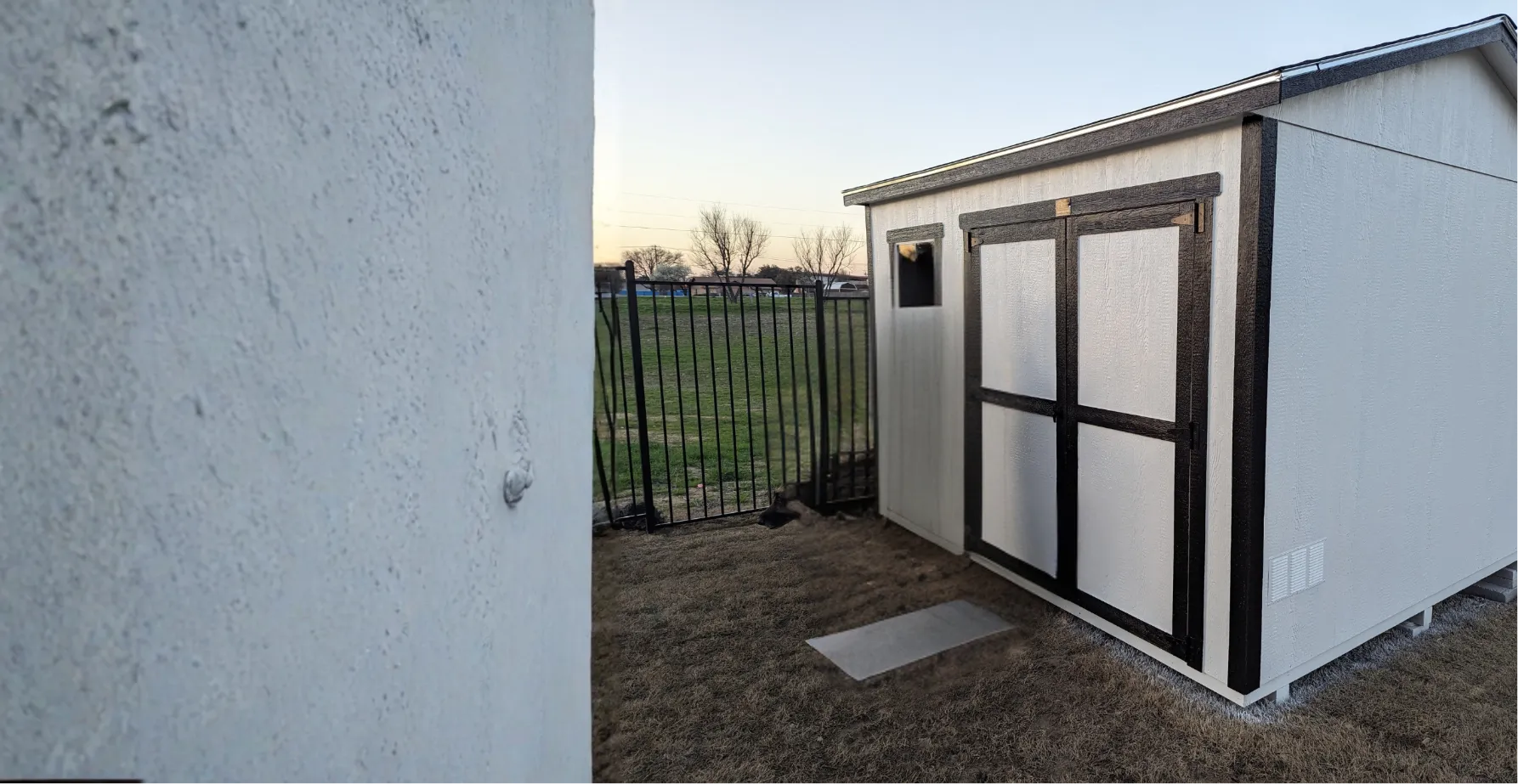
Texas does not believe in moderate weather. We get summers where the heat index hits 110 and winters where ice shuts down highways. Your backyard shed sits through all of it and so does everything inside. Homeowners across Fort Worth, Denton, Bridgeport and Decatur deal with these extremes every year.
Most people skip insulation when buying a storage shed. Seems like overkill for storing lawn equipment, right? But that thinking costs money in ways you do not see coming until the damage is done. We have seen it happen too many times to count.
Why Insulation Matters in a Shed
Sheds Are Not Just for Rakes Anymore
Walk through any neighborhood and you will find sheds doing double duty as home offices, workshop sheds, art studios, gyms and hangout spaces. The pandemic accelerated this but the trend was already there. People need space and sheds provide it cheaper than additions. Customers in Rhome and Azle are converting sheds into usable living space all the time.
Any shed you will spend time in needs temperature control. And even pure storage sheds protect valuables better when temps stay moderate. A custom shed with proper insulation serves you year round.
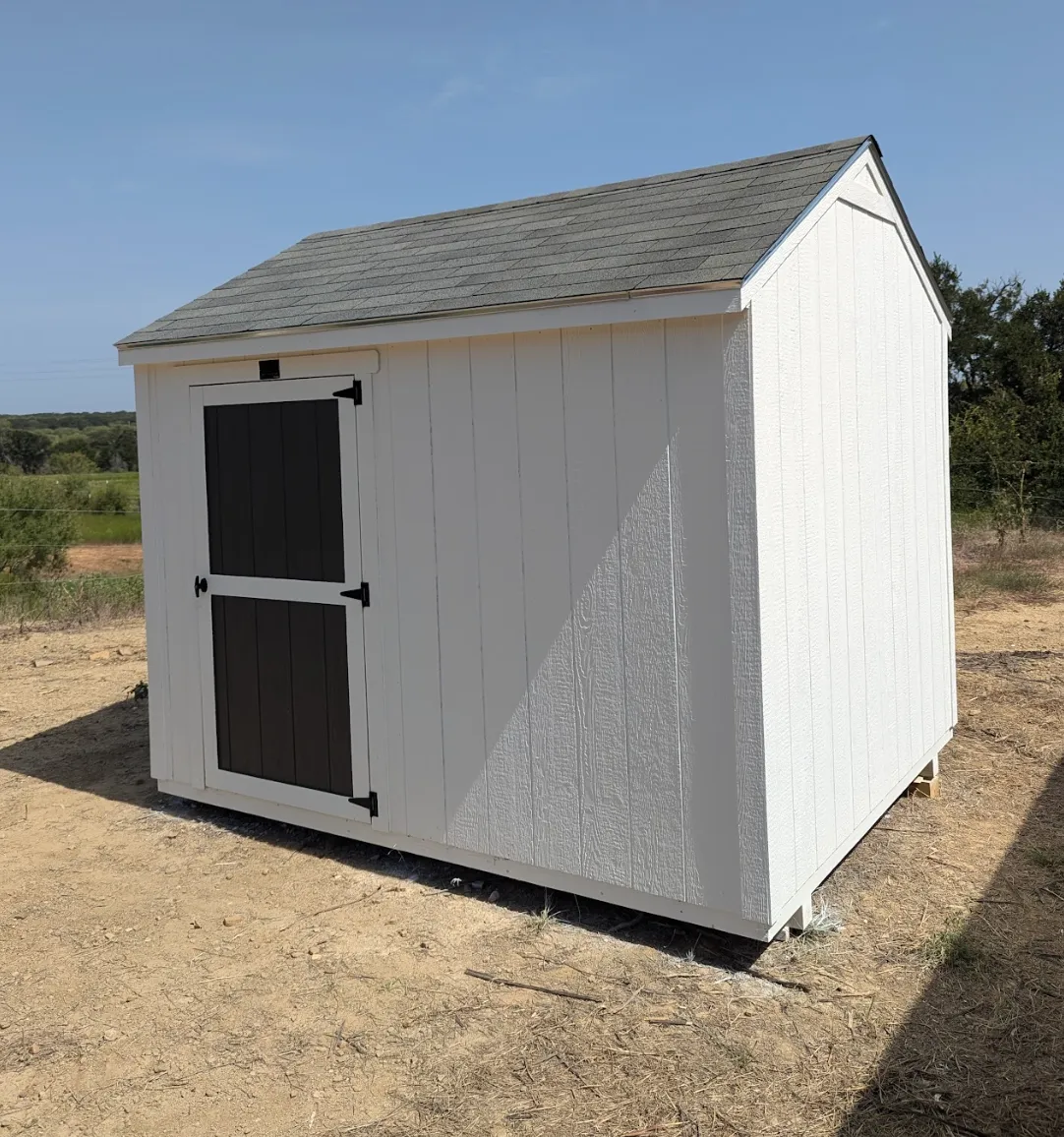
Basic Sheds Let Heat and Cold In
Here is what happens in an uninsulated metal shed on a July afternoon in Fort Worth. Interior temps hit 140 to 150 degrees. That is not an exaggeration because we have stuck thermometers in these things.
At those temperatures paint cans pressurize dangerously. Plastic warps. Electronics fry. Leather cracks. Photos fade. Anything with a battery degrades faster. Your expensive power tools and lawn equipment take a beating every single summer day.
Winter brings the opposite problem. Freeze thaw cycles crack containers. Condensation forms on cold surfaces and causes rust. Water based products solidify and separate. Customers in Bridgeport and Decatur deal with serious cold snaps that damage unprotected items.
Insulation moderates these swings. Will not make a shed comfortable without HVAC but keeps it from becoming an oven or a freezer. That protection alone saves money on replacements.
How Insulated Sheds Help Cut Costs
Less Need for Heating and Cooling
If you're running climate control in your shed—and plenty of people do—insulation determines whether it works or just runs up your bill.
An uninsulated 12x16 shed with a window AC needs the unit running nearly constantly to stay bearable in summer. The heat just pours through the walls and roof faster than the AC can remove it.
Insulate that same shed and a smaller AC unit handles it with ease, cycling on and off like it should. That's half the electricity or less. Same story with heating—a space heater in an insulated shed actually warms the space instead of fighting a losing battle.
Protects Your Stuff from Damage
Temperature extremes destroy things. We've seen it dozens of times.
Power tools with plastic housings that warped in the heat. Vintage furniture that cracked when moisture froze in the wood grain. Holiday decorations that melted into each other. Photo albums fused together.
The cost of insulation looks pretty reasonable compared to replacing a $400 miter saw or irreplaceable family photos.
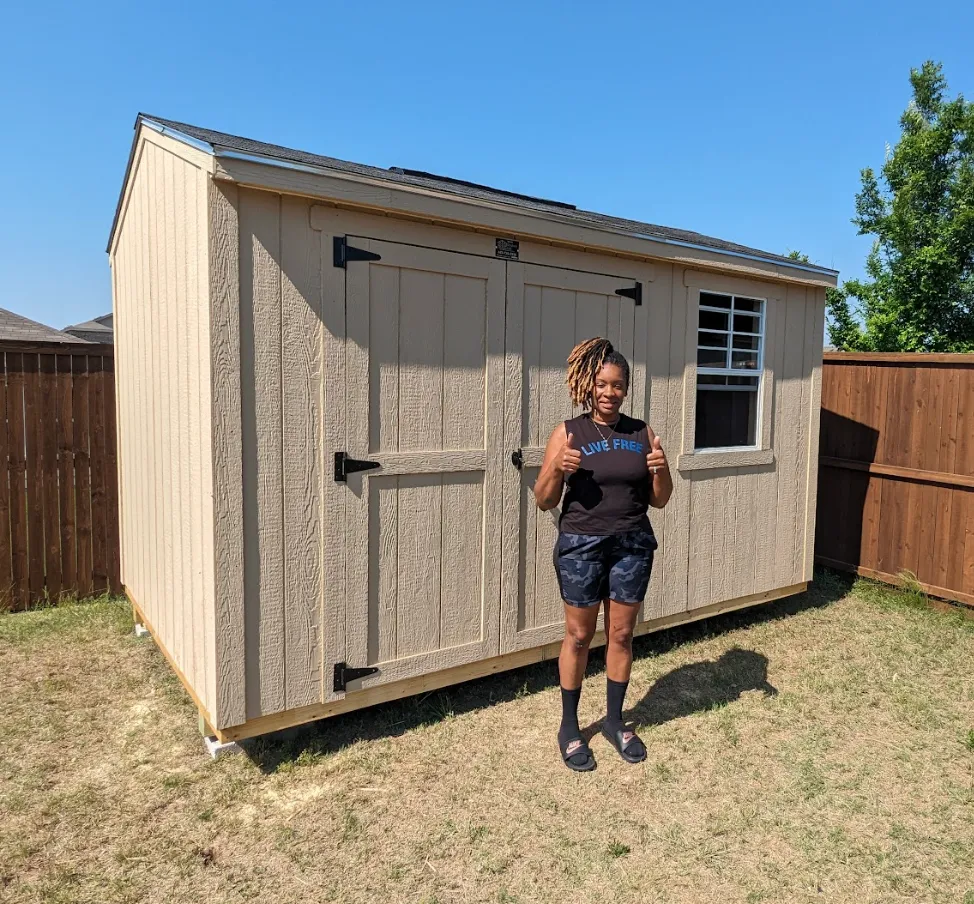
Insulation Types and What Works Best
Popular Insulation Options
Fiberglass batts are the pink stuff you see at hardware stores. Cheap and easy to install between studs with decent performance. Needs a vapor barrier to work right. R value around 3.2 per inch.
Foam board comes in rigid sheets like polystyrene or polyiso. Better R value per inch than fiberglass and it does not absorb water. Can double as a vapor barrier. Costs more but works better for Texas conditions.
Spray foam is the premium choice. Expands to fill every gap with the highest R value and creates a perfect air seal. Professional installation recommended for best results. Worth the investment for a home office or workshop shed.
Radiant barriers reflect heat instead of slowing it. Installed under the roof they bounce solar heat back before it enters the shed. Particularly effective in Texas where heat gain is the main concern.
Choosing the Right Insulation for Your Shed
For most Texas sheds keeping heat out matters more than keeping heat in. That means prioritizing the roof because that is where most heat enters. Customers in Denton and Fort Worth see the biggest difference from roof insulation.
A radiant barrier under the roofing makes a dramatic difference. Foam board on the walls handles both seasons. Spray foam if you are going all in on a climate controlled workspace like a home office shed.
Retrofitting an existing shed? Foam board is your friend. Cuts to size and installs with adhesive or fasteners. Does not require tearing out walls.
Long-Term Benefits of an Insulated Shed
Lower Utility Bills Over Time
The math works out faster than you'd expect on a small building.
Running a 10,000 BTU window AC costs roughly $80-100/month in a Texas summer if the shed gets regular use. An insulated shed might need only a 5,000 BTU unit—cutting that cost in half.
Heating gets even more dramatic. Space heaters pull 1,500 watts. In an uninsulated shed, that heater runs constantly and barely keeps up. Insulated? It cycles normally and your electric bill notices the difference.
Increases Shed Lifespan and Comfort
Temperature swings stress building materials. Metal expands and contracts, working fasteners loose. Wood swells and shrinks, opening gaps. Caulk and seals crack from the movement.
An insulated shed experiences less thermal cycling, which means less wear. The building ages more gracefully and needs fewer repairs.
And if you're spending any time in the shed, comfort matters. Nobody wants to dread walking into a sauna to grab something.
Extra Perks: Noise Control and Moisture Protection
Keeps the Shed Quieter
Insulation absorbs sound in both directions. Rain on a metal roof becomes background noise instead of a drumroll. Your power tools bother the neighbors less.
If you're using the shed as an office or studio, this matters. Hard to concentrate or take calls when every raindrop sounds like hail.
Reduces Moisture Buildup
Condensation happens when warm moist air contacts cold surfaces. In an uninsulated shed, the walls and ceiling get cold at night and moisture from the air condenses on them.
That moisture causes rust on metal items, mold on organic materials and general dampness that makes the space unpleasant.
Insulation keeps interior surfaces closer to air temperature, dramatically reducing condensation. Combine with proper ventilation and moisture problems disappear.
Why Choose SE Yard Solutions for an Insulated Shed
Expert Planning, Smart Materials
We've built hundreds of sheds across North Texas. We know which insulation types actually perform here, where vapor barriers are necessary and how to vent a building so insulation does its job.
We can build insulation into new construction or retrofit existing sheds. Either way, you get the right materials installed correctly.
Custom Options, Built for You
Not every shed needs the same approach. A workshop you'll heat all winter needs more insulation than seasonal storage. A home office might justify spray foam while a garden shed does fine with foam board.
We'll discuss how you plan to use the space and recommend accordingly.
Conclusion
Insulation hides inside walls where nobody sees it. But it affects everything—comfort, energy costs, humidity control and whether your belongings survive storage.
For any shed you'll spend time in or store anything valuable, insulation pays for itself. Even basic insulation in a storage shed prevents damage that would cost more than the upgrade. Combine insulation with other weather-resistant features for complete protection.
Want a Shed That Saves You Money Year-Round?
- See Our Work: Browse insulated shed projects
- Where we build: Fort Worth, Denton, Decatur, Rhome, Bridgeport and all of North Texas
- Financing Available: Flexible payment plans make insulated sheds affordable
- Contact Us: Call (682) 730-2238 to discuss insulation options
Frequently Asked Questions
How much does shed insulation cost?
Materials run $1-3 per square foot depending on type. For a 12x16 shed, expect $300-600 in materials or $800-1500 professionally installed with vapor barriers done right.
Can I insulate my existing shed?
Yes. Foam board is the easiest retrofit—cuts to size and installs with adhesive or screws. We retrofit insulation regularly.
Is insulation worth it for just storage?
Depends what you're storing. Lawn tools, probably not. Power tools, electronics, paint, photos, anything temperature-sensitive—definitely yes.
What R-value do I need in Texas?
R-13 in walls handles most needs. For serious climate control, go higher. Radiant barrier on the roof matters more than wall R-value in our climate.
Does insulation help with humidity?
Significantly. By keeping surfaces warmer than dew point, insulation prevents the condensation that causes moisture problems.