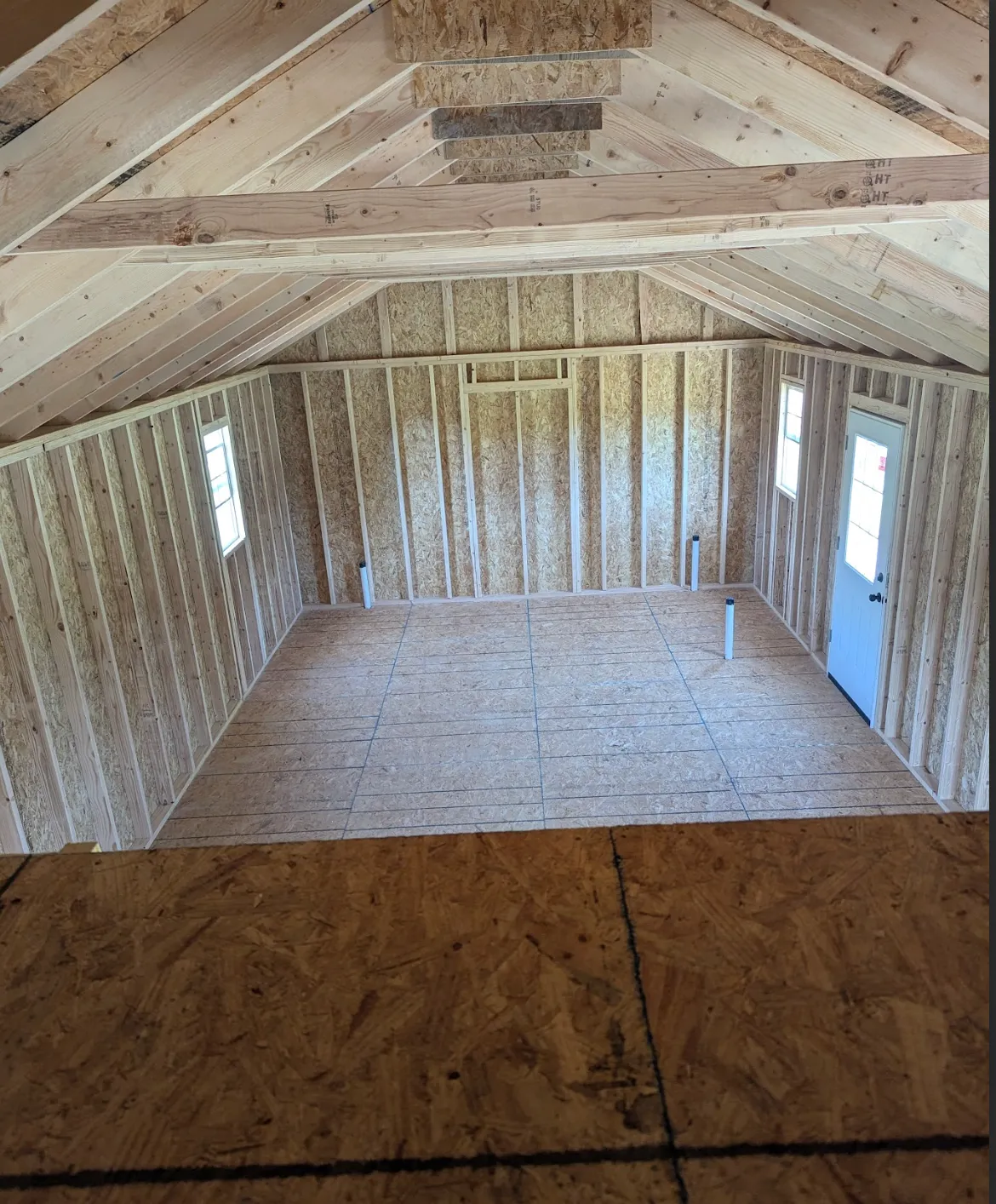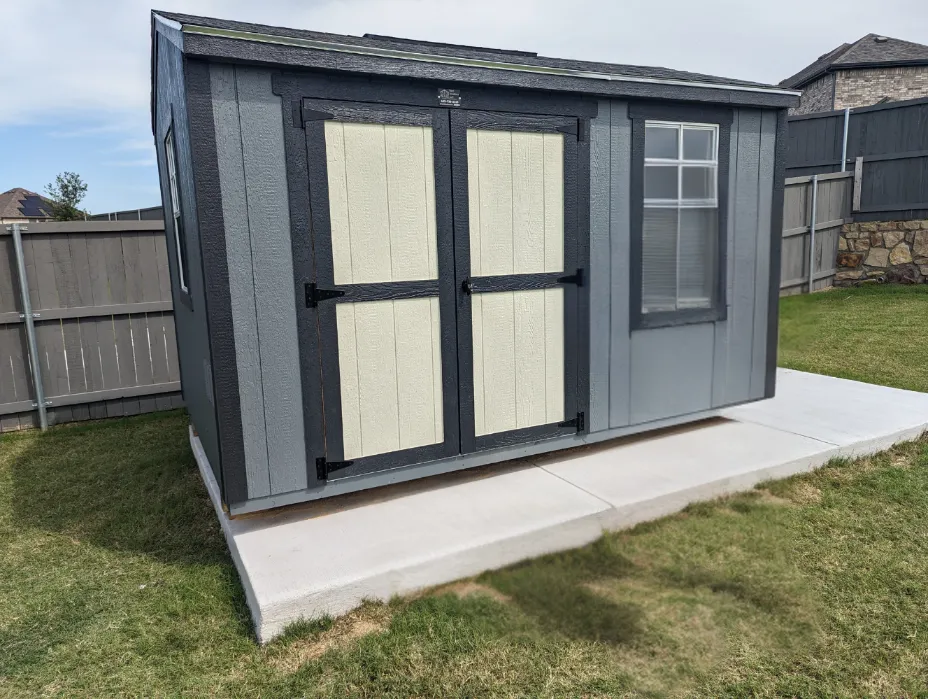
That shed in your backyard does not have to be just one thing. We have built sheds that started as storage units and evolved into home offices, workout spaces, craft studios and even guest quarters. The trick is thinking ahead when you are planning the build. Homeowners across Fort Worth, Denton and North Texas are discovering how a versatile shed design pays off over time.
Too many people order a shed for whatever they need this year without considering what they might need in five years. Kids grow up and move out, leaving behind sports equipment that becomes woodworking space. Remote work becomes permanent and suddenly that garden shed needs electricity and insulation to become a home office.
Planning for versatility from the start saves money down the road. Trust us because adding electrical after the walls are finished is nobody's idea of a good time. Customers in Rhome and Azle who planned ahead are glad they did.
Why Choose a Custom Shed?
The pre-fab sheds at big box stores are fine for what they are. But they're designed for the average customer, which means they're not designed for anyone in particular.
Custom means you decide the footprint. Got a weird L-shaped spot between your fence and the pool equipment? We can work with that. Want something tall enough to stand a kayak upright? No problem. Need a shallow building because the property line is closer than you'd like? Doable.
Custom also means you control the details that matter. Door placement, window size and location, ceiling height, interior layout—all the things that determine whether a shed works for you or against you.
And when you build on-site like we do, there's no delivery truck tearing up your lawn. No size restrictions based on what fits on a flatbed. No settling for "close enough."
Define Your Shed's Purpose
Start with the obvious: what are you using this shed for right now? Make a list. Be specific.
Storage is usually on there somewhere. But what kind? Lawn equipment has different requirements than holiday decorations. A riding mower needs wide doors and a reinforced floor. Boxes of Christmas lights just need to stay dry.
Workshop space means thinking about workbenches, tool storage, electrical outlets and lighting. Maybe dust collection if you're doing serious woodworking.
Home office demands insulation for year-round use, climate control, internet connectivity and probably more windows than a typical shed. You'll be spending hours in there—it needs to be comfortable.
Hobby space could be anything. Pottery needs a sink and maybe a kiln hookup. Art studio needs north-facing windows for consistent light. Music room needs soundproofing.
Write down everything. Then prioritize. What's essential today? What might you want in three years? Five years?
Choosing the Right Size and Layout
Here's where most people go wrong: they build too small. Whatever square footage you think you need, add 20%. You will fill it. Guaranteed.
A 10x12 shed sounds spacious until you've got a lawn mower, a wheelbarrow, the weed eater, gas cans and all the stuff that was "temporarily" stored there three years ago. Now you're doing that sideways shuffle just to reach the back corner.
For multipurpose use, 12x16 is a reasonable minimum. That gives you 192 square feet—enough for dedicated zones. Storage along one wall, workspace in the center, maybe a small desk area by the window.
Think about traffic flow. You shouldn't have to move five things to access the one thing you need. Leave corridors. Plan where large items will live and make sure you can actually get them in and out.
Ceiling height matters too. Standard 8-foot walls feel cramped in a small footprint. Go to 9 or 10 feet if budget allows. You'll never regret extra headroom, but you might regret skimping on it.
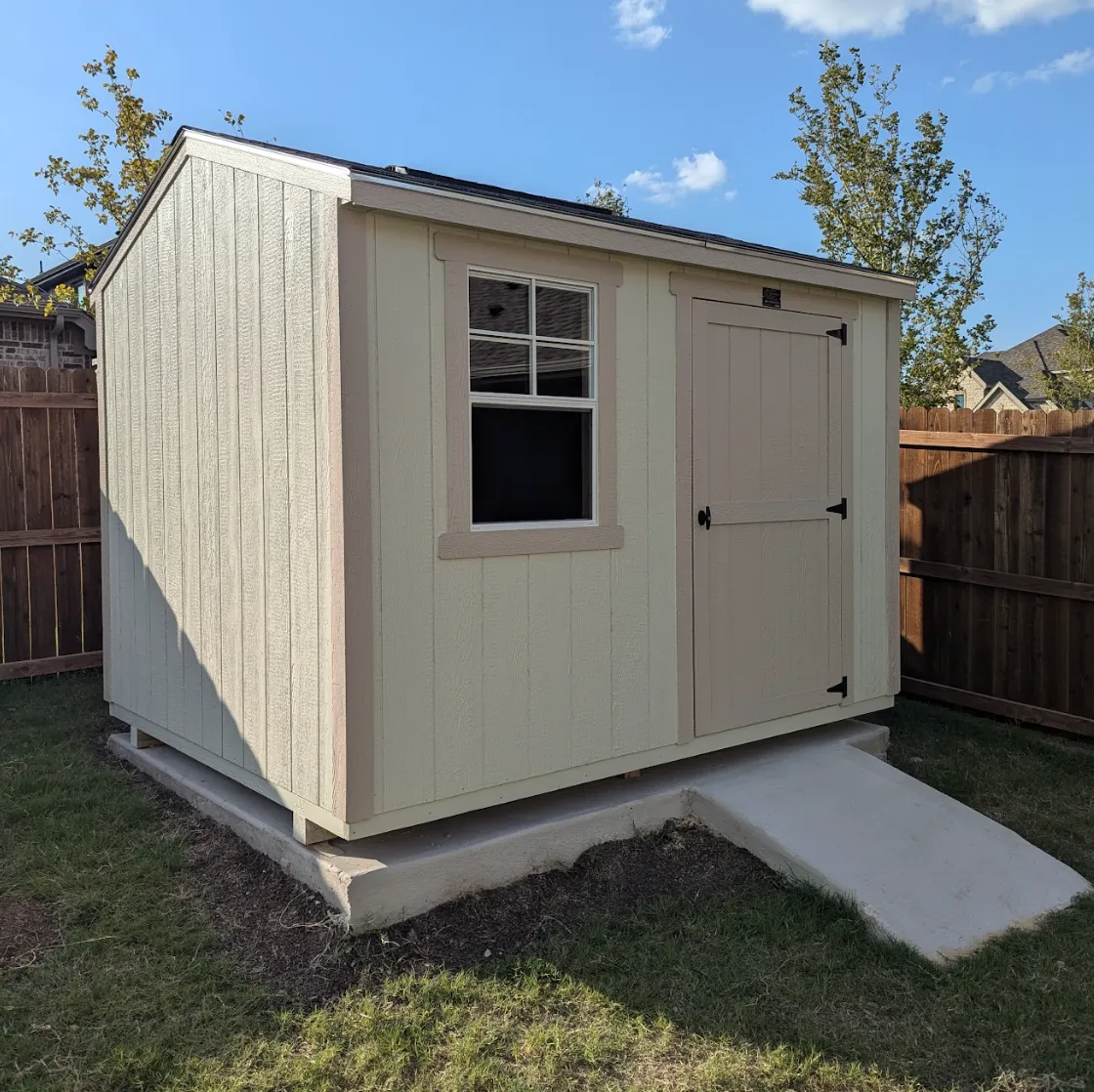
Choose a Shed Style That Fits Your Home
The shed is part of your property now. It should look like it belongs there.
A Frame sheds have that classic look with a steep roof and traditional proportions. Good for neighborhoods with older homes or anywhere a barn aesthetic fits. The roof pitch sheds rain efficiently which matters in Texas storm season.
Barn style sheds give you extra overhead storage with that gambrel roof shape. Popular for a reason because you get more usable vertical space without a taller wall. Nice compromise if height restrictions are a concern. Customers in Bridgeport and Decatur often choose this style for the extra loft space.
Garden sheds tend toward the charming side. More windows, sometimes a porch overhang, details like window boxes or decorative trim. If your shed will be visible from the house or street then appearance might be worth the investment.
Match the siding and roofing to your house and it will look intentional, not like an afterthought you picked up at the hardware store.
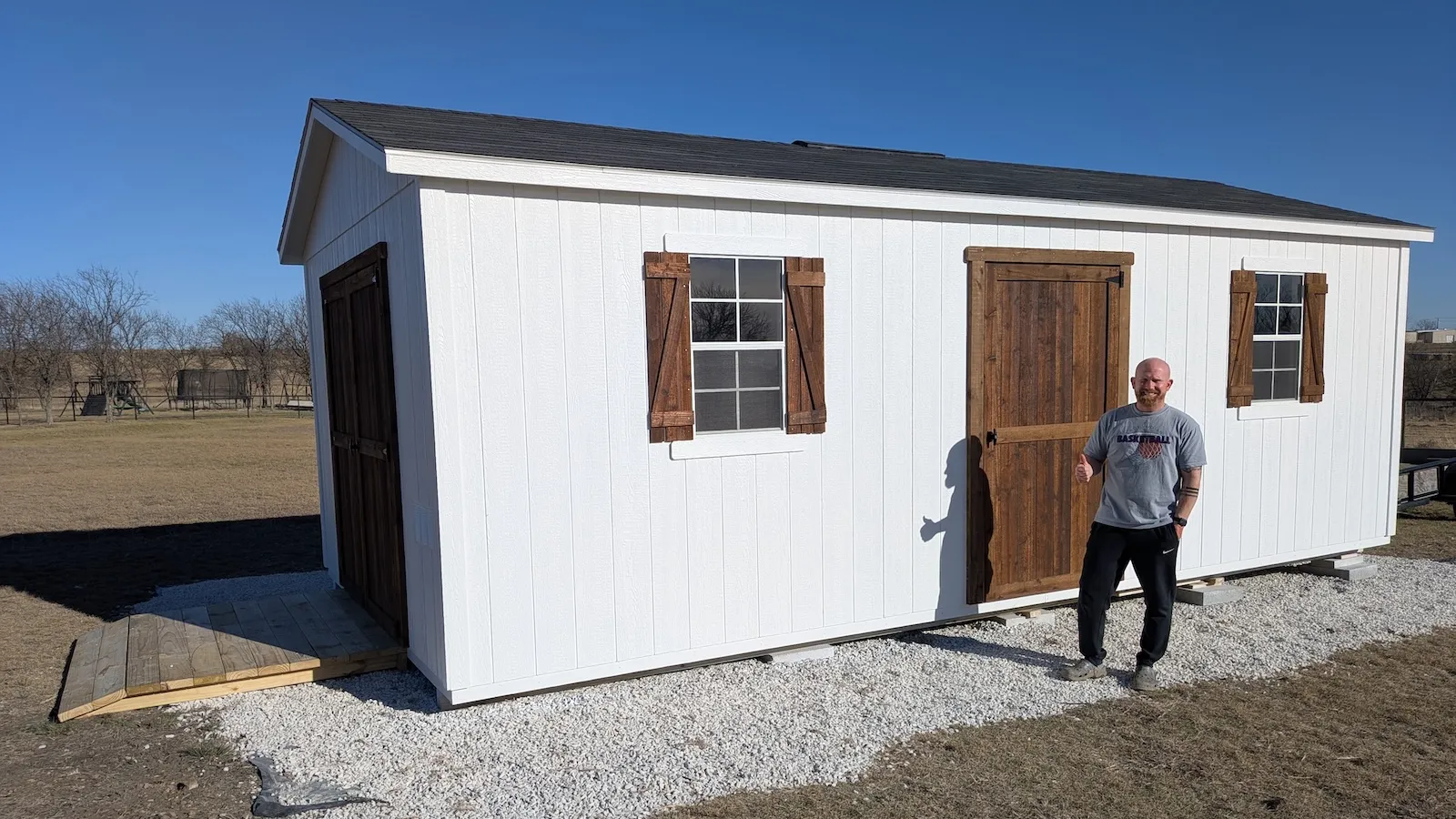
Add Custom Features for Functionality
This is where versatility gets built in.
Electrical is almost always worth the investment, even if you're not sure you need it yet. Wiring a shed during construction costs a few hundred dollars. Wiring it after the fact costs considerably more plus the hassle of cutting into finished walls. Get at least a subpanel and several outlets on different circuits.
Windows in multiple walls make a space feel larger and provide options for furniture arrangement. Operable windows for ventilation—not just fixed glass. Skylights work great in sheds where wall space is at a premium.
Doors deserve thought. A standard entry door is fine for a home office but useless for storing a riding mower. Wide double doors or a garage-style roll-up door solve access problems. Consider a people door AND a large door if you've got multiple uses planned.
Built-in storage—shelving, pegboard, overhead racks—maximizes usable space. See our guide to custom add-ons for more ideas. But don't overdo it if you're planning to reconfigure later. Permanent built-ins limit flexibility.
Plumbing is a bigger undertaking but makes sense for certain uses. Art studio, workshop with cleanup needs, pool house functions. Water and drain lines are much easier to run during construction.
Ensure Durability Against Weather
Texas weather will test any structure. Plan accordingly.
The roof is your first line of defense. Metal roofing handles hail better than shingles, reflects summer heat and lasts decades. Worth the upfront cost for a building you intend to use long-term.
Proper flashing around windows and doors prevents the water intrusion that causes so many problems. This is not where you want to cut corners.
Proper ventilation prevents moisture buildup inside. Ridge vents, gable vents or turbine vents—pick at least one. Trapped humidity leads to mold, rust and deterioration of whatever you're storing.
Anchoring the shed to the foundation keeps it grounded during high winds. Concrete anchors or auger-style ground anchors, properly installed, solve this problem.
Design for Future Adaptability
Here's the versatility secret: leave room to change your mind.
- Run conduit even if you're not wiring everything now. It's cheap during construction and makes future upgrades easy.
- Frame for a future window even if you don't install one today.
- Consider access panels for reaching plumbing or electrical later without demolition.
- Skip the permanent interior walls if you're uncertain about long-term use.
- Document everything. Take photos before drywall goes up.
Partner With a Reliable Builder
Custom sheds aren't a DIY project for most people. The precision required for a building that's weather-tight and up to code requires experience.
Look for builders who listen more than they talk. Your ideas matter more than their standard packages. A good builder asks questions about how you'll use the space, what matters most to you, what your budget actually is.
On-site builders like SE Yard Solutions can work with your specific property conditions—slopes, tight access, trees that can't be removed. The shed gets built where it needs to go, not wherever a delivery truck can reach.
Ready to Design Your Custom Shed?
- See Our Work: Browse custom shed builds
- Custom Options: View custom shed details
- Financing: Flexible payment plans
- Contact: Call (682) 730-2238
Frequently Asked Questions
How long does a custom shed take to build?
Most builds take 1-3 days depending on size and complexity. Custom features like electrical or plumbing may add time. We'll give you a realistic timeline before starting.
Do I need a permit for a shed?
Usually yes, though requirements vary by municipality. Buildings under a certain size (often 120-200 square feet) may be exempt. We handle permitting for all our builds.
What's the price difference between basic and fully customized?
Varies widely based on what you want. A basic 12x16 might run $4,000-5,000. Add electrical, extra windows, premium siding and custom interior features and you could be at $8,000-12,000 or more.
Can I add features later if I change my mind?
Many features can be added later, though it's typically more expensive than including them initially. Electrical and plumbing especially are much easier during initial construction.
How do I know what size shed I need?
List everything you want to store or do in the space. Measure your largest items. Add circulation space. Then add another 20% because you'll accumulate more stuff. When in doubt, go bigger.