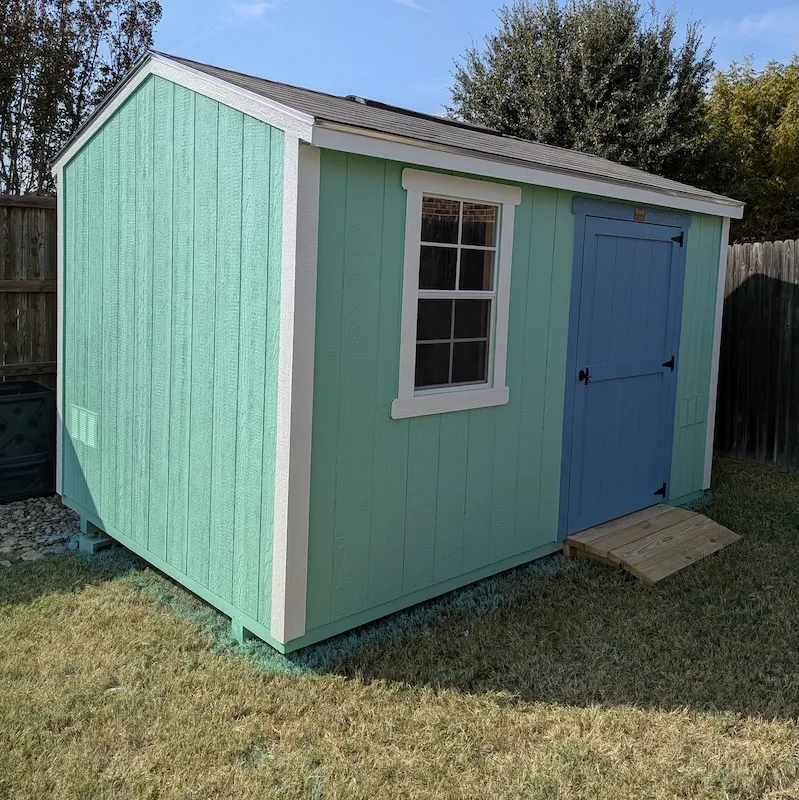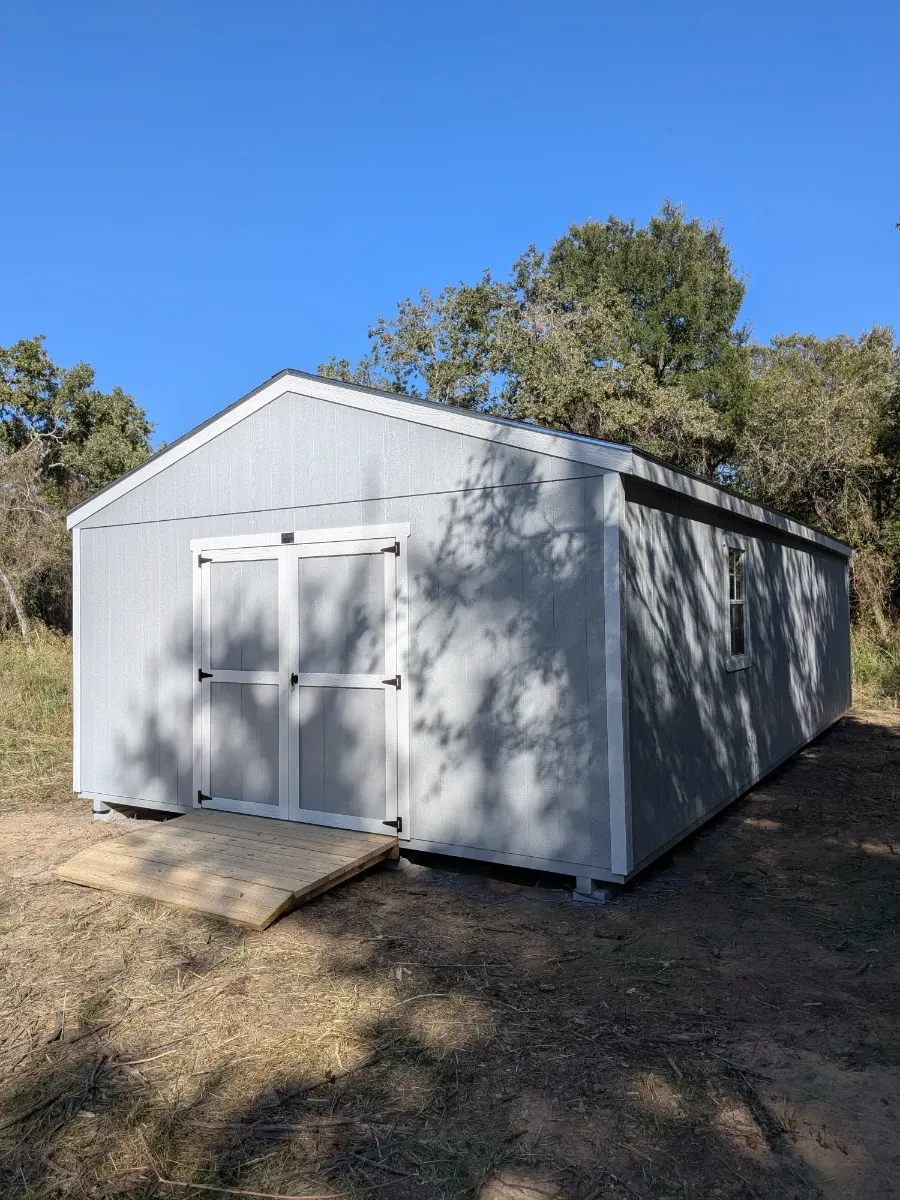
The floor of your storage shed takes more abuse than any other part of the structure. Heavy equipment rolls across it. Tools get dropped on it. Moisture tries to seep up through it. Choosing the right flooring material makes the difference between a shed that serves you for decades and one that develops problems within a few years. Homeowners across Fort Worth, Denton, Bridgeport and Decatur ask us about flooring options all the time.
The right flooring can turn a basic backyard shed into a dependable space for storage, work or hobbies. This guide examines the best flooring materials, their benefits and key considerations to help you make the right choice for your situation.
Why Shed Flooring Matters
The floor is the backbone of any shed. It supports the weight of stored items while resisting environmental wear. A poorly selected floor can crack, warp or rot which leads to expensive repairs or replacements. Durable flooring ensures your shed remains functional for years. Customers in Rhome and Azle deal with clay soil and moisture issues that make flooring choice especially important.
Flooring also shapes how you use the shed. A smooth and robust surface supports heavy tools or machinery while moisture resistant options work better for humid climates. When planning your shed's purpose whether storage, a workshop shed or a recreational space the flooring choice is critical.
The right flooring enhances safety and comfort. Slippery or uneven surfaces can create hazards in workspaces while cushioned options improve comfort during long tasks. Prioritizing durability and suitability maximizes your shed's value and usability.
Concrete: The Sturdy Standard
Concrete is a top pick for shed flooring due to its exceptional strength and longevity. It handles heavy loads, resists moisture and requires minimal upkeep, typically just occasional sweeping or sealing. For sheds used as workshops or for heavy storage, concrete is a reliable choice.
Installing concrete can be costly and labor-intensive, needing a level base and proper curing time. It also feels cold and hard underfoot, which may not suit sheds used for extended periods. Adding a sealant or epoxy coating can boost durability and enhance appearance, especially for an A-Frame Style Shed built for versatile use.
To improve comfort, consider adding mats or rugs in high-traffic areas. Concrete excels in sheds housing heavy equipment, like lawnmowers or woodworking tools. Its wear resistance makes it a long-term investment for busy sheds.
Plywood: Affordable and Versatile
Plywood offers a cost-effective flooring solution that’s easy to install and adaptable to various shed types. Pressure-treated plywood resists moisture and pests, making it suitable for sheds in wet climates. Its lightweight nature is ideal for smaller or portable structures.
Plywood may not hold up under heavy loads or constant foot traffic as well as concrete. Regular sealing or painting extends its lifespan, as untreated plywood can warp or rot over time. This material suits a Garden Shed used for light storage or seasonal tools.
Marine-grade plywood provides superior moisture resistance for added durability. Plywood’s customizability allows painting or staining to match your shed’s aesthetic. Its affordability makes it a practical choice for budget-conscious shed owners.
Vinyl: Low-Maintenance and Modern
Vinyl flooring, especially luxury vinyl planks or tiles, blends durability with a polished look. It resists water, stains and scratches, making it ideal for sheds prone to spills or humidity. Installation is simple, often needing only a level subfloor, which appeals to DIY enthusiasts.
Vinyl is pricier than plywood but offers a comfortable, attractive surface, perfect for sheds used as offices or hobby spaces. It’s less suited for heavy machinery due to potential denting under extreme weight. Pairing vinyl with a sturdy base enhances its performance in a Custom Shed tailored to specific needs.
Available in styles mimicking wood or stone, vinyl adds aesthetic versatility. It’s easy to clean with just a damp mop, making maintenance minimal. For sheds doubling as creative or professional spaces, vinyl balances practicality and visual appeal.
Gravel: Simple and Cost-Effective
Gravel is an economical flooring choice for sheds that don’t require a refined interior. It offers excellent drainage, preventing water buildup beneath the shed and needs minimal setup. This makes it suitable for sheds used for basic storage or outdoor equipment.
Gravel floors can shift over time, creating uneven surfaces and aren’t ideal for sheds with heavy furniture or delicate tools. Regular raking maintains a level surface, but it may not suit sheds needing a smooth, stable floor. Gravel complements simple structures like those offered by SE Yard Solutions for rustic functionality.
Compacting the gravel or using a geotextile fabric underneath prevents sinking and improves stability. Gravel is a low-cost option best for dry climates or sheds with minimal foot traffic. Its simplicity makes it practical for temporary or seasonal sheds.
Rubber Mats: Comfort and Protection
Rubber mats or interlocking tiles provide a cushioned and slip resistant surface that is easy to install over existing floors. They protect against impact damage from dropped tools and offer comfort for standing during long tasks. Rubber's resistance to moisture and chemicals makes it highly versatile for workshop sheds.
While durable rubber can be costly for large sheds and may trap dirt if not cleaned regularly. It is an excellent choice for sheds used as workshops or gyms where comfort and safety are priorities. Rubber mats enhance the usability of a barn style shed designed for active use. Customers in Bridgeport and Decatur often add rubber mats to their workshop floors.
Available in rolls, tiles or mats rubber offers flexibility in coverage and design. It is particularly effective in sheds needing noise reduction or vibration dampening such as those with power tools. For existing floors rubber provides an affordable upgrade without major renovations.
Factors to Consider When Choosing Flooring
Selecting the right flooring depends on your shed’s purpose, location and budget. Here are key factors to guide your decision:
- Purpose: Heavy equipment needs a strong base like concrete, while hobby spaces benefit from vinyl or rubber for comfort.
- Climate: Moisture-resistant materials like vinyl or treated plywood suit wet or humid areas.
- Budget: Gravel and plywood are cost-effective, while concrete and vinyl require more investment.
- Maintenance: Low-maintenance options like concrete or vinyl save time, while plywood needs regular sealing.
- Installation: Gravel and rubber mats are DIY-friendly, but concrete often requires professional help.
Consider the shed’s foundation and ventilation as well. A raised foundation with gravel or plywood prevents moisture buildup, while proper ventilation reduces humidity for all flooring types. These factors ensure your flooring choice supports your shed’s long-term needs.
Additional Considerations for Shed Flooring
The preparation of the shed’s base is crucial beyond material choice. A level, well-drained foundation prevents shifting or settling, which can damage any flooring type. For concrete, a gravel or sand base ensures stability, while plywood and vinyl need a solid subfloor.
Ventilation is vital for flooring longevity, especially in humid regions. Poor airflow can trap moisture, causing mold or rot in plywood or gravel setups. Adding vents or a vapor barrier mitigates these risks, particularly for sheds used year-round.
Aesthetic preferences matter for sheds serving as workspaces or hobby areas. Vinyl and sealed concrete offer customizable finishes, while plywood can be painted or stained. Gravel and rubber prioritize function over form but are less visually flexible.
Future upgrades or shed relocation should also be considered. Plywood and rubber mats are easier to replace or move than concrete, which is permanent once poured. If flexibility is a priority, choose modular or lightweight materials that adapt to changing needs.
Take the Next Step
- See Our Work: Explore durable sheds
- Financing: Flexible payment plans
- Contact: Call (682) 730-2238
Frequently Asked Questions
What is the most durable shed flooring material?
Concrete is the most durable, resisting heavy loads, moisture and wear with minimal maintenance. It’s ideal for sheds used for heavy storage or workshops.
Can I install flooring myself?
Gravel, plywood and rubber mats are DIY-friendly, requiring basic tools and preparation. Concrete typically needs professional installation for best results.
Which flooring is best for a humid climate?
Vinyl and pressure-treated plywood resist moisture well, preventing rot and mold. Ensure proper sealing for added protection.
How do I maintain shed flooring?
Concrete and vinyl need occasional cleaning, while plywood requires sealing every few years. Gravel floors benefit from periodic raking to stay level.
Is rubber flooring worth the cost?
Rubber is pricier but offers comfort and impact resistance, making it ideal for sheds used as gyms or workshops. It’s a worthwhile investment for active spaces.