
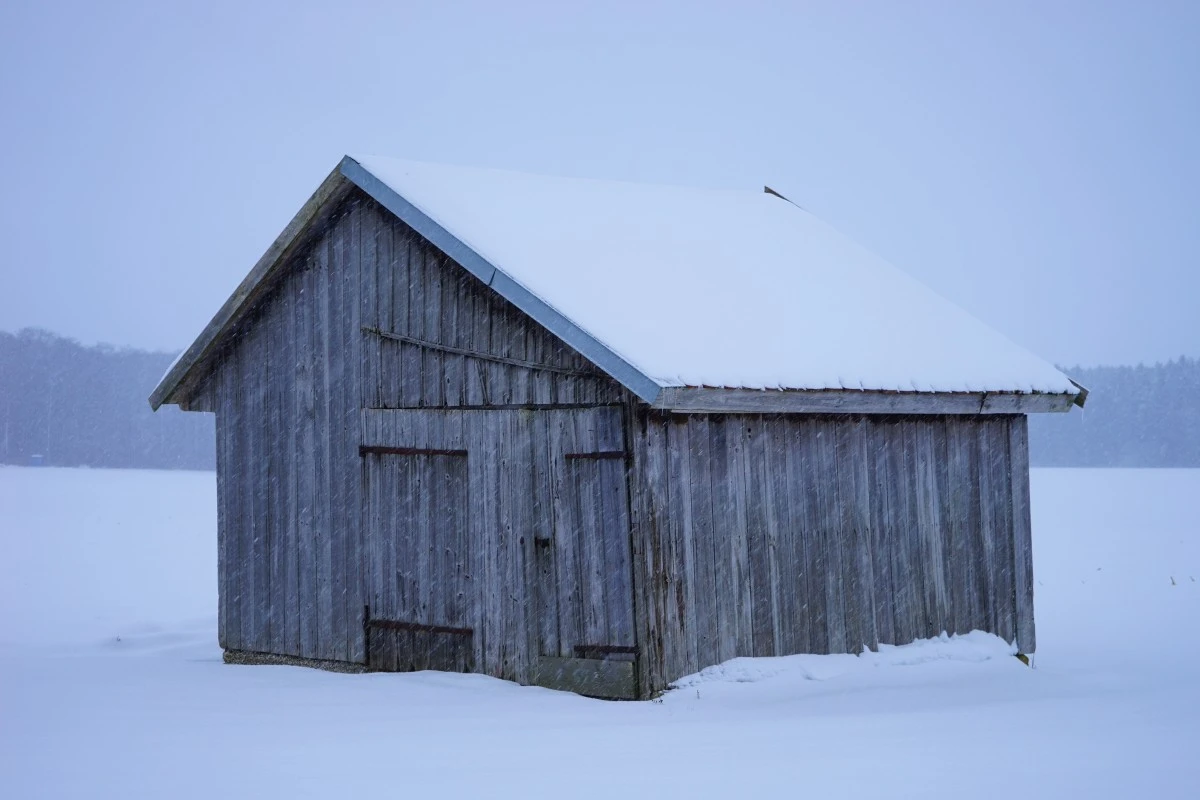
If you've been watching the news you already know what's coming. A major ice storm is barreling toward the Dallas-Fort Worth area this weekend and meteorologists are calling it one of the worst we've seen in years. Freezing rain, ice accumulation and temperatures dropping into the teens. Roads will be a mess. Power outages are likely. And if you've got expensive outdoor equipment sitting in your backyard right now, you've got about 48 hours to do something about it.
We've been building sheds across North Texas for years. After every major winter storm we get calls from homeowners who left their riding mower out, forgot about the pressure washer or didn't think to drain the garden hoses. Ice doesn't care how much you paid for your equipment. It'll crack plastic housings, freeze fuel lines and turn a perfectly good $400 trimmer into scrap.
Here's what you need to do before Friday night.
What's Actually Coming This Weekend
The National Weather Service is predicting significant ice accumulation across the entire DFW metroplex. We're talking a quarter inch to half inch of ice on surfaces, with the worst conditions expected Saturday morning through Sunday afternoon. Temperatures will hover right around freezing during the day and drop into the low 20s at night.
That's the perfect recipe for ice damage. When temps bounce above and below 32 degrees, water gets into every crack and crevice then freezes and expands. Your outdoor equipment has dozens of places where this can cause serious damage: fuel tanks, plastic housings, hoses, seals and gaskets.
Homeowners in Denton, Fort Worth and across Dallas County need to take this seriously. We remember 2021 too well. A lot of folks learned expensive lessons that week.
First Things First: Prep Your Shed
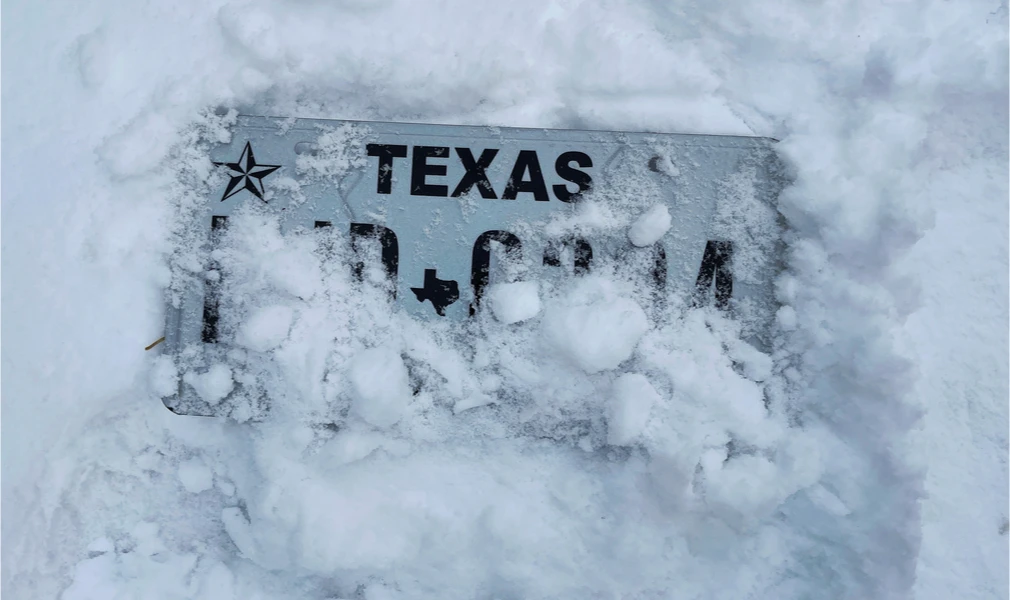
If you've got a shed, it's about to earn its keep. Before you start hauling equipment inside, take 15 minutes to make sure the shed itself is ready for what's coming.
Walk around and check:
- Overhanging branches: Ice-loaded branches break and fall. If there's a limb hanging over your shed, trim it now or it might trim itself through your roof
- Door and window seals: Make sure doors close tight. Cold air infiltration makes the inside colder and any moisture inside will freeze
- Roof condition: Look for any loose panels or gaps. Ice works its way into small openings and causes problems when it thaws
- Gutters: If your shed has gutters, clear them out so melting ice can drain properly instead of backing up
- Clear the area: Move anything leaning against the shed walls. You want airflow and nothing that can blow into the structure
Customers across Decatur, Bridgeport and the surrounding areas have told us their sheds came through past ice storms without any damage while neighbors with cheaper prefab buildings had problems. Metal roofing lets ice slide off. Solid construction holds up. Build quality matters when weather gets serious.
Stock Your Shed for Storm Response
Your shed is the perfect staging area for storm supplies. Keep these where you can grab them without digging through a cluttered garage in the dark:
- Bags of salt or ice melt for walkways
- Sand or kitty litter for traction on steps
- A good snow shovel or ice scraper
- Extra tarps for emergency covering
- Rope or bungee cords for securing covers
- Flashlight and batteries
If power goes out and you need to get to your generator or supplies, a well-organized shed with everything near the door makes storm response way easier than fighting through garage clutter. Our guide to shed organization add-ons covers ways to maximize that efficiency.
Now Get Your Equipment Inside
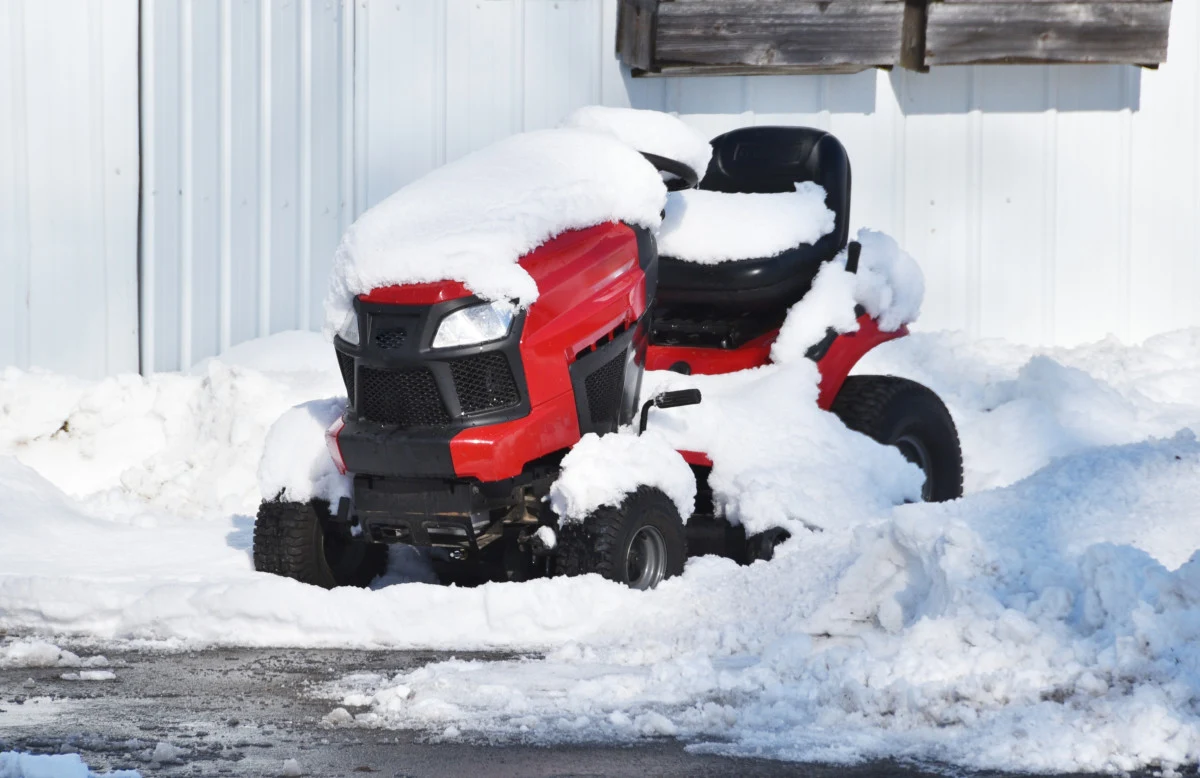
With your shed prepped and stocked, start moving the expensive stuff in. Gas-powered equipment is priority one.
Your lawn mower, string trimmer, leaf blower, chainsaw and pressure washer all have fuel systems that hate freezing temperatures. Water condensation in fuel tanks expands when it freezes and can crack the tank or damage fuel lines. Even if nothing cracks the freeze-thaw cycle degrades seals and gaskets.
What to do right now:
- Move all gas-powered equipment into your shed or garage
- If you can't move it, at minimum drain the fuel or add fuel stabilizer
- Run the engine for a few minutes after adding stabilizer so it circulates through the carburetor
- For equipment you won't use until spring, now is a good time to do a full winterization
A riding mower costs $2,000 to $5,000. A new carburetor and fuel system repair runs $200 to $400. Moving it into covered storage takes 10 minutes. Do the math.
Garden Hoses and Irrigation
This is the one people forget every single time. Garden hoses left connected to outdoor spigots are a disaster waiting to happen. Water trapped in the hose freezes, expands and can crack the hose. Worse, it can push ice back into the spigot and burst pipes inside your wall.
Before Friday:
- Disconnect all hoses from spigots
- Drain hoses completely by holding one end up and walking the length
- Coil and store hoses in your shed
- Cover outdoor spigots with foam insulators (available at any hardware store for a few bucks)
- If you have an irrigation system, make sure it's been properly winterized
Outdoor Furniture and Grills
That patio set you got last summer? Ice accumulation adds serious weight. A half inch of ice on a fabric umbrella or cushions can tear seams and damage frames. Grills with any moisture inside can have burners and ignition systems damaged by freezing.
Move what you can into storage. For pieces too large to move, at minimum take cushions and fabric covers inside. Close grill lids and cover with a fitted cover. If you've got a barn style shed with tall doors, you might be surprised what you can fit inside temporarily.
After the Storm: What to Check
Once temps climb back above freezing and the ice melts, do a walkthrough of your property before using any equipment that was left outside.
Check for:
- Cracked plastic housings on equipment
- Damaged hoses or fuel lines
- Rust on metal surfaces that were exposed to moisture
- Branch damage to sheds, fences or other structures
- Pooling water or drainage issues
Start equipment briefly and listen for anything unusual before putting it to work. If something sounds off or won't start, have it looked at before forcing it.
Thinking About Next Winter
If you're scrambling right now because you don't have anywhere to put your outdoor equipment, you're not alone. A lot of homeowners deal with this exact problem every time a storm rolls through. Tarps and covers help but they're not real protection.
A proper storage shed eliminates the scramble. Everything has a place. Your mower, trimmer, grill, patio furniture and garden supplies stay protected year-round without you having to think about it. When the next storm warning pops up, you close the shed door and that's it.
We build sheds on-site across the DFW area, from Fort Worth and Denton to Weatherford and everywhere in between. Metal roofing, solid construction and custom sizing to fit your space. If this weekend's storm has you thinking you need a better storage solution, that's worth a conversation.
For now though, focus on protecting what you've got. You've got about 48 hours. Use them.
Done Scrambling Before Every Storm?
A quality shed means your equipment stays protected year-round. No more last-minute panic when weather warnings hit.
- Custom built on-site to fit your property
- Metal roofing that handles ice, hail and wind
- Financing available
Or call us: (682) 730-2238
Frequently Asked Questions
Q: What outdoor equipment should I protect before an ice storm?
Protect lawn mowers, string trimmers, pressure washers, grills, patio furniture, potted plants, garden hoses and any gas-powered equipment. Ice accumulation and freezing temperatures can crack plastic components, damage engines and rust metal parts.
Q: Can ice damage my shed?
A well-built shed with proper roofing can handle ice storms without issue. The main concerns are ice dams on poorly ventilated roofs and branch damage from nearby trees. Metal roofing handles ice better than shingles because ice slides off more easily.
Q: How do I prepare my shed for an ice storm?
Clear gutters if your shed has them, trim any overhanging branches, check that doors and windows seal properly and make sure the roof is in good condition. Stock the shed with salt, a shovel and any supplies you might need quick access to during the storm.
Q: Should I run a heater in my shed during freezing weather?
Only if the shed is properly insulated and ventilated and you use a heater rated for enclosed spaces. Never use propane heaters or generators inside an enclosed shed due to carbon monoxide risk. A well-insulated shed maintains more stable temperatures without additional heating.
Q: How cold does it have to get to damage outdoor equipment?
The danger zone is around 32°F when water freezes and expands. Equipment with any moisture in fuel systems, hoses or housings can be damaged. Repeated freeze-thaw cycles (temps bouncing above and below freezing) cause the most problems because water works into small spaces then expands when it freezes.